







Capital gains remain non-recurring even if received in consecutive years, rules Rajasthan High Court
Jodhpur: The Rajasthan High Court has allowed an appeal filed by Purvi Pokharna, holding that capital gains earned by her father from the sale of ancestral property could not be treated as regular family income while deciding her eligibility under the Rajiv Gandhi Scholarship for Academic Excellence Scheme, 2021.
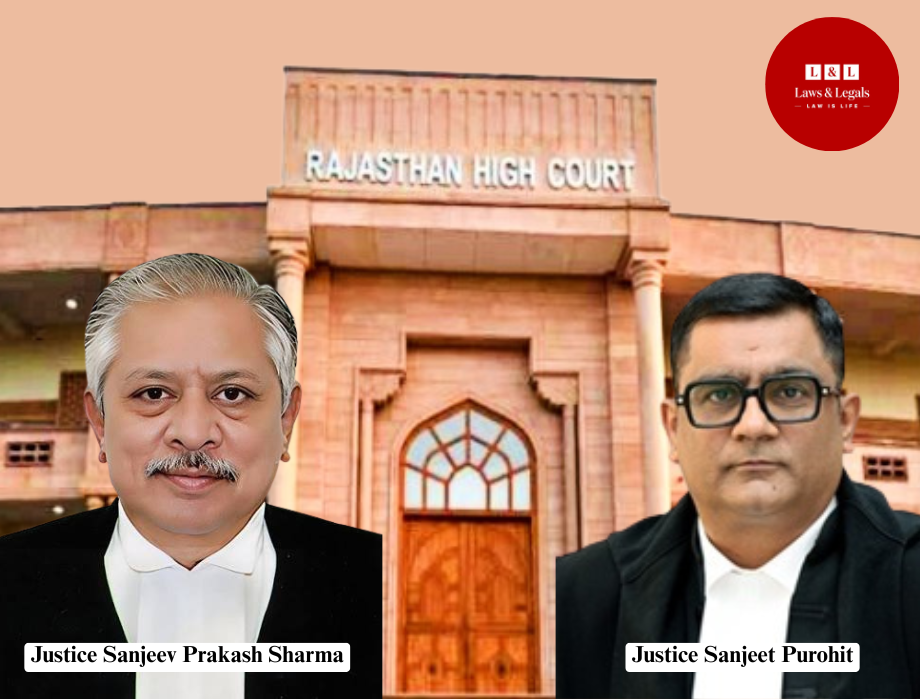
A Division Bench of Acting Chief Justice Sanjeev Prakash Sharma and Justice Sanjeet Purohit set aside the earlier judgment that had upheld the authorities’ decision to deny Pokharna consideration under the E-1 category of the scholarship.
The dispute began when the authorities added the capital gains shown in her father’s Income Tax Returns to the family’s annual income. After including these gains, the authorities calculated the family income at around ₹38.58 lakh and placed Pokharna in Category E-3, under which the scholarship was not available.
Pokharna argued that her father’s regular income was below ₹8 lakh and that the capital gains from the sale of ancestral property should not be counted because Clause 8(v) of the scholarship guidelines specifically excludes non-recurring income such as capital gains.
The High Court agreed with the appellant and noted that Clause 8(v) clearly excludes non-recurring income, including capital gains, while calculating a candidate’s family income.
The Court held that capital gains do not become regular income simply because they appear in two consecutive assessment years. What matters is the nature and source of the income, not merely the fact that it was received in more than one year.
The Bench also noted that the properties sold by Pokharna’s father in 2021, 2022 and 2023 were ancestral properties. There was no evidence that he was engaged in the business of buying and selling land or property.
The Court rejected the authorities’ argument that excluding the capital gains would defeat the purpose of the scholarship scheme. It held that while the scheme aims to support meritorious students from comparatively weaker financial backgrounds, the authorities must follow the specific rules laid down in the scheme.
The Bench further held that authorities cannot ignore an express exclusion in the guidelines merely because they believe that doing so would not serve the broader purpose of the scheme.
Accordingly, the High Court held that Pokharna was wrongly placed in Category E-3 instead of E-1 and allowed her appeal and set aside the judgment dated November 17, 2025.