







No new hotels, resorts, homestays, tourism camps or mining within 1 km of critical leopard habitat in Pali; Court orders scientific mapping of caves, breeding sites and wildlife corridors
Jodhpur: The Rajasthan High Court has directed authorities to enforce a one-kilometre Leopard Habitat Construction-Control Zone around identified leopard caves, dens, breeding sites, high-use resting areas and wildlife corridors in the Jawai region of Pali district.
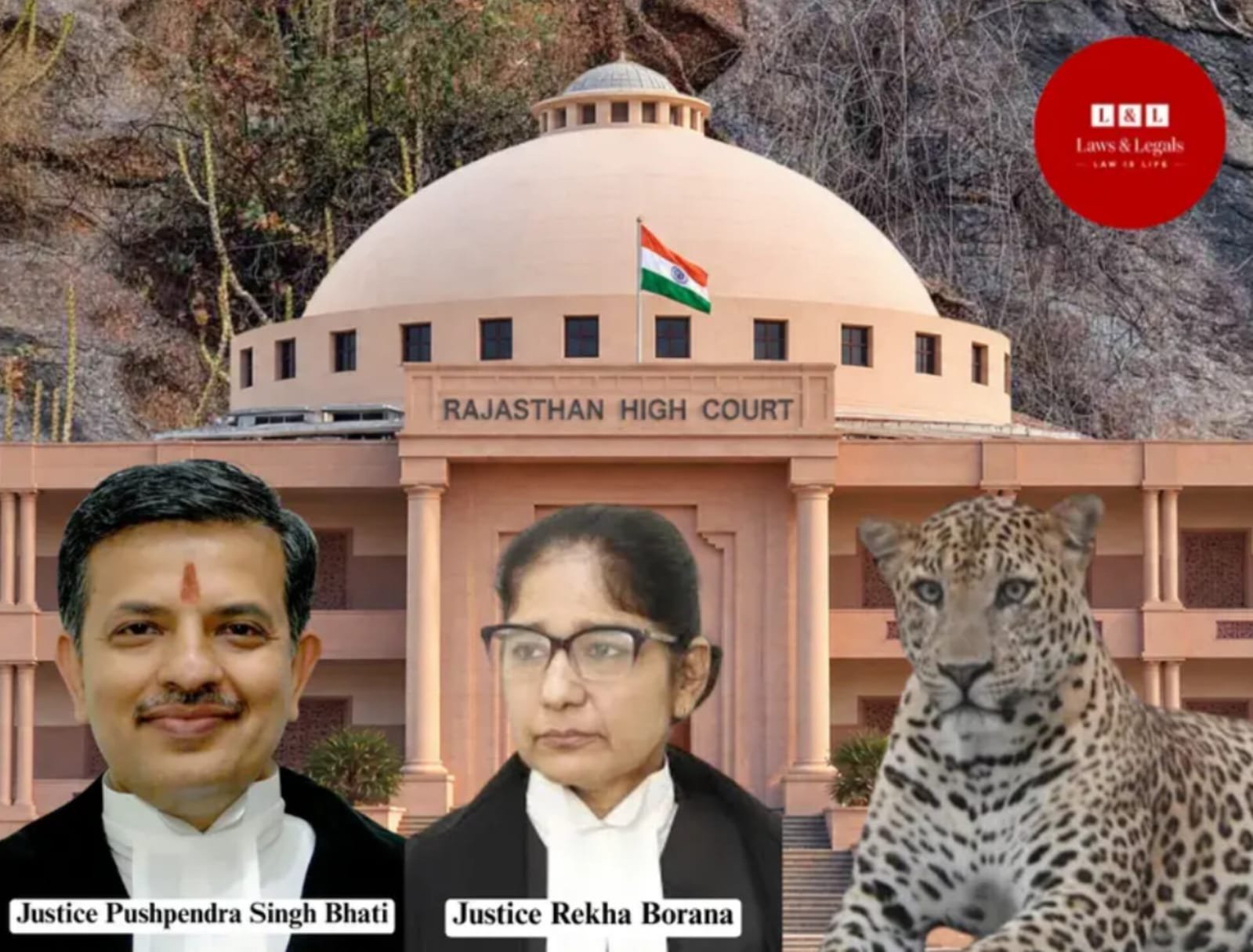
A Division Bench of Justice Pushpendra Singh Bhati and Justice Rekha Borana passed the directions while disposing of a Public Interest Litigation seeking protection of leopard habitat from unregulated construction, tourism, safari operations, fencing and other activities.
One-Km Zone to Remain as Interim Safeguard
The Court observed that leopard habitat in Jawai extends beyond notified conservation reserves into revenue, private and community lands.
The court declined to impose a blanket construction ban without scientific assessment, but warned that unchecked development could cause irreversible damage to caves, breeding sites, water sources and movement corridors.
The court therefore adopted one kilometre as an interim, evidence-informed regulatory threshold, subject to revision after a detailed scientific assessment of the region.
No Hotels, Resorts and Mining
The Court directed strict enforcement of the State Government’s 2015 order within one kilometre of the notified Jawai Leopard Conservation Reserves.
Accordingly, no new hotel, resort, guesthouse, homestay, tourism camp or similar commercial establishment can be sanctioned or commenced. New industrial activity, including mining, and land conversion by revenue authorities are also prohibited in the zone.
Critical Leopard Sites Get Direct Protection
The restrictions apply regardless of land ownership, barring new construction, hill cutting, blasting, excavation, roads or boundary walls in caves, breeding sites, wildlife corridors, wetlands and other ecologically sensitive areas.
Activities that could block, fragment or materially disturb leopard movement or habitat are similarly prohibited.
Village Life and Essential Services Exempted
The Court made clear that the restrictions would not prevent ordinary community activities.
Bona fide residential construction within existing village abadi areas, repairs to lawful houses, schools, healthcare facilities, drinking-water infrastructure, traditional agriculture and grazing may continue, subject to applicable permissions and wildlife-friendly conditions.
Forest Department Giver 8 Weeks for Habitat Mapping
The Deputy Conservator of Forests, Pali, in coordination with the Revenue Department and other concerned authorities, has been directed to prepare a provisional geo-referenced map within eight weeks.
The mapping exercise will identify:
• Leopard caves and dens
• Breeding and resting sites
• Wildlife movement corridors
• Wetlands and water sources
• Settlements and roads
• Tourism clusters
The map will subsequently have to be placed in the public domain and displayed at the concerned Gram Panchayats
Night Safaris, Drones and Artificial Lighting Banned
The existing Standard Operating Procedure (SOP) for safari and eco-tourism activities will continue across forest, revenue, community and private lands.
The Court ordered strict enforcement of restrictions on night safaris, baiting, spotlights, flashlights, drones and vehicle congregation near leopard caves. Safari vehicles and operators must remain registered and GPS-enabled.
Tourism establishments have also been prohibited from advertising guaranteed leopard sightings or using feeding, baiting, lighting or habitat alteration to attract wildlife.
Mining And Fencing Restrictions Continue
The Court continued the prohibition on mining within the notified conservation reserves, within one kilometre of their boundaries and on identified leopard habitat.
The court also banned new barbed-wire fences and solid walls that block wildlife movement. Existing fencing found to block recognised corridors may be removed or modified after notice to the concerned landholder.
Final Boundary to be Decided after Scientific Study
The District Collector, Pali and Deputy Conservator of Forests, Pali have been tasked with coordinating implementation.
The one-kilometre zone is only a temporary safeguard, not a permanent restriction, until the State completes scientific studies and decides which areas need strict protection and where limited activities can be allowed