




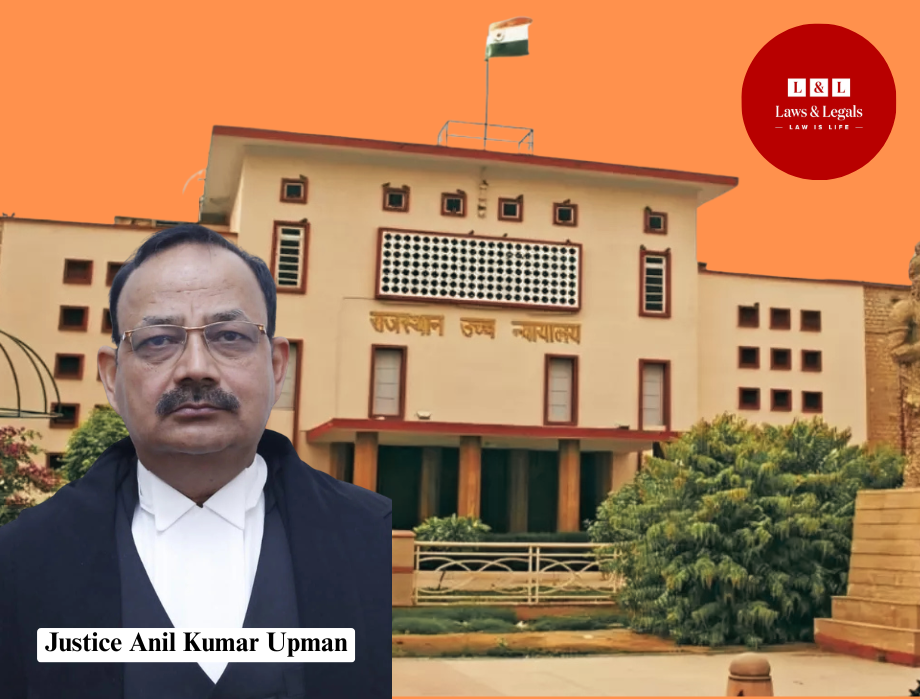
Jaipur: The Rajasthan High Court has directed the trial court to conduct the trial in a seven-year-old murder case on a day-to-day basis and make every effort to conclude the proceedings within two months.
Justice Anil Kumar Upman observed that the right to a speedy trial is not limited to the accused and that victims are also entitled to the timely conclusion of criminal proceedings.
The Court noted that the trial had already reached the final stage. The prosecution evidence had been completed, statements of the accused had been recorded, and the defence evidence had also been closed. Despite this, the case had remained pending, with the matter fixed for final arguments.
The petitioner alleged that repeated applications and adjournments by the accused were delaying the trial.
He also pointed out that he had lost his son in the alleged incident and was therefore facing continued hardship because of the prolonged proceedings.
The Court reiterated that “the right to speedy trial is an integral part of the fundamental right to life and personal liberty guaranteed under Article 21 of the Constitution.”
Stressed on the point that “prolonged criminal proceedings can cause serious prejudice not only to the accused, but also to victims, witnesses and society.”
Court placing its reliance on the Supreme Court’s recent decision in Keshvendra Singh v. Shankar Singh & Anr., observed that the right to a speedy trial is not limited to the accused but is also a valuable right of the victim.
The High Court clarified that speedy trial must not deprive the accused of a fair opportunity to defend himself, and legitimate applications must be considered.
The Court said that if the accused deliberately delays the trial, the trial court must step in to prevent unnecessary delays.
Court held that the matter “ought not to be permitted to be protracted any further,” particularly considering the victim’s right to speedy justice and directed to dispose the matter preferably within a period of two months