

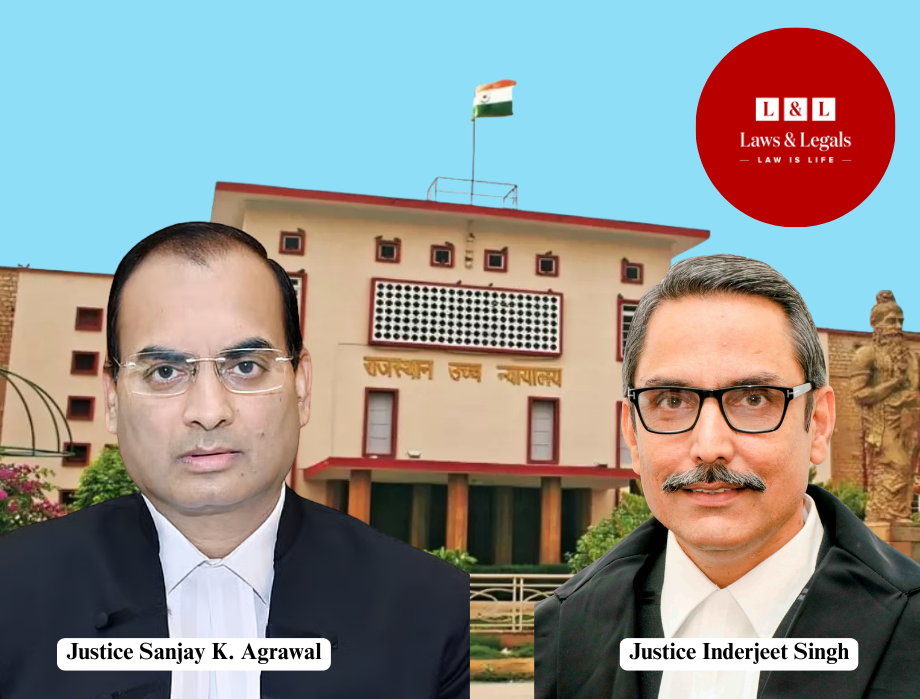




Jaipur: The Rajasthan High Court has upheld an order directing the State authorities to allow a selected Basic Computer Instructor to join government service after his acquittal in a pending criminal case, along with notional seniority and consequential benefits.
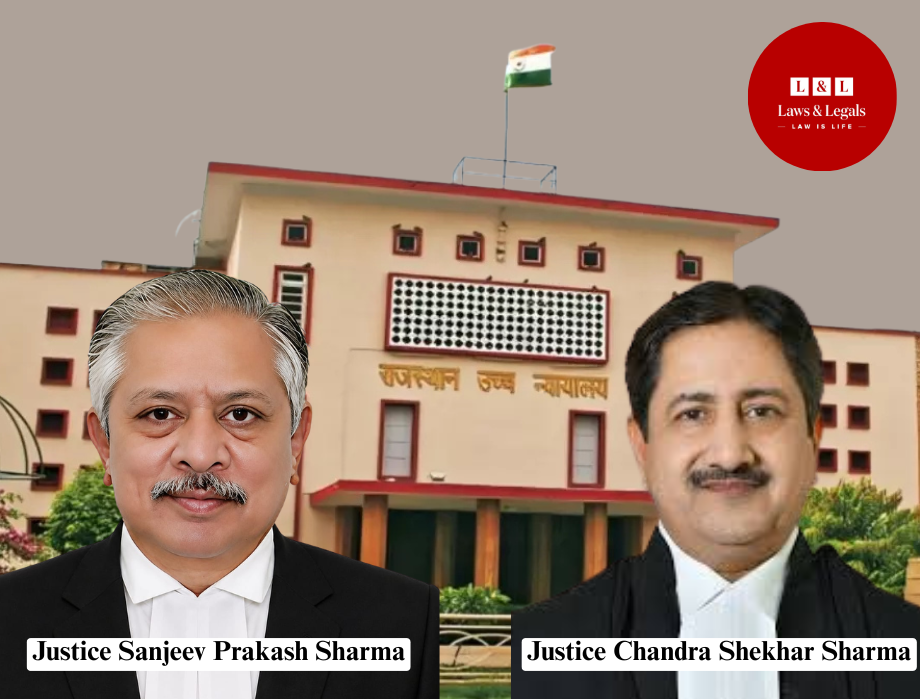
A Division Bench comprising Justice Sanjeev Prakash Sharma and Justice Chandra Shekhar Sharma dismissed the State’s appeal and upheld the Single Judge’s order directing the authorities to permit Jeetendra Kumar Choudhary to join pursuant to his appointment order dated April 13, 2023.
The Court has held that a selected candidate facing a pending criminal case can be denied joining government service until the criminal proceedings are decided.
However, if the candidate is subsequently acquitted, the criminal case cannot continue to bar his appointment.
The respondent was selected through a recruitment process initiated in 2022 and was issued an appointment order on April, 2023.
During verification, authorities found that an FIR had been registered against him, subsequently he was not allowed to join after verification revealed a pending criminal case against him involving offences including rioting and voluntarily causing grievous hurt.
HC initially Held “Pending Case Not Enough to Deny Appointment”
The Single Judge had earlier held that merely because a criminal case was pending against the selected candidate, it could not by itself be treated as a disqualification from public employment.
The Court directed the authorities to allow him to join, with notional consequential benefits from the date similarly selected candidates joined.
The State challenged this decision, arguing that the pendency of criminal proceedings was sufficient to withhold the appointment under the applicable Department of Personnel circulars.
Pending Criminal Case Is No Automatic Right to Join
The Division Bench, however, did not endorse the Single Judge’s broader view that a candidate should be allowed to join government service while the criminal case is still pending.
The Bench observed that the question was not whether the candidate was presumed innocent, but whether he should be permitted to enter government service while facing criminal charges.
Court held that the State was justified in withholding the appointment until the criminal case was decided.
Acquittal changed the position
During the appeal, the respondent was acquitted by the trial court.
The High Court noted that the trial court had found the complainant side to be the aggressors and that the medical evidence was unreliable and noted that no weapon had been recovered from the respondent.
Following the acquittal, the Bench found no remaining bar to his appointment and upheld the direction allowing him to join with notional consequential benefits and seniority from the date other candidates appointed through the same order had joined. Consequently, dismissed the state appeal.