


SC Says Courts Need Not Decide Disputes That Are No Longer “Living”; Rajasthan HC Finds 23-Year-Old PIL Infructuous After BOT Concession Ended in 2011
Jodhpur: The Rajasthan High Court has disposed of a 23-year-old Public Interest Litigation concerning toll collection on the Manglana–Makrana–Borawar–Bidiyad road project, holding that the dispute no longer survives for effective adjudication as the underlying BOT concession had ended years ago.
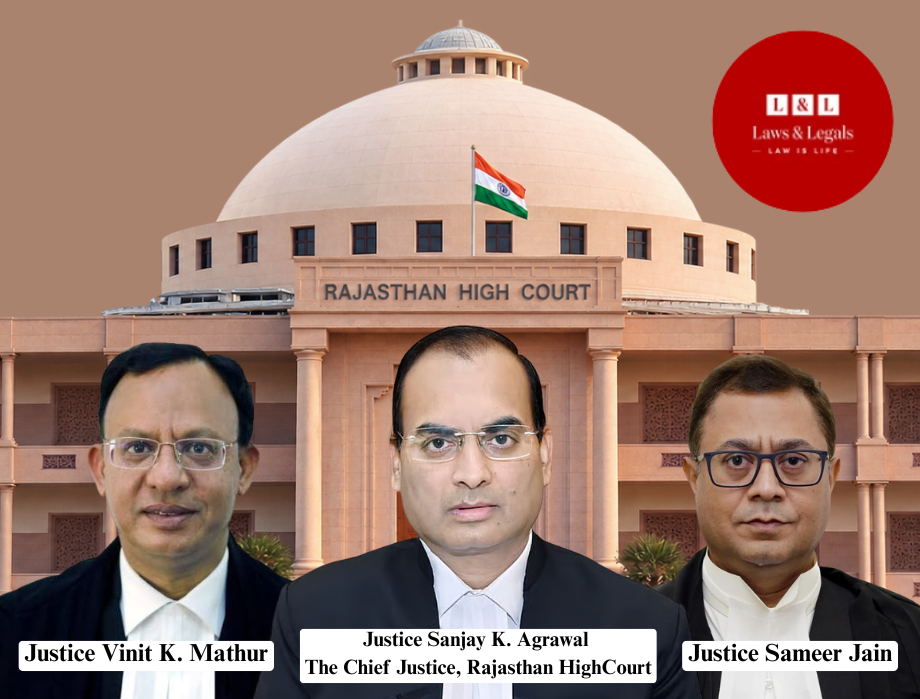
A Larger Bench comprising Chief Justice Sanjay K. Agrawal, Justice Vinit Kumar Mathur and Justice Sameer Jain was considering a substantial question of law concerning the interpretation of Section 20 of the Rajasthan Motor Vehicles Taxation Act, 1951.
The question had been referred to the Larger Bench in 2003.
23-Year-Old Dispute: Court Finds No Effective Relief Survives
The PIL was filed by two advocates from Makrana challenging the BOT arrangement under which a private entrepreneur was to finance and develop the road and recover the investment through toll collection.
The concession period was fixed at 125 months.
The Court noted that the work order was issued in 2001, the construction period ended in 2002, and the concession and toll-collection period came to an end in 2011. The contractual arrangement at the centre of the challenge had therefore ceased to operate long ago.
The Bench further noted that the petitioners had not shown that any effective or executable relief remained available despite the expiry of the concession period.
Leaves Legal Question Open as Dispute Has Already Ended
The Larger Bench said that even if a question of law has been referred to the Court, it need not be decided when subsequent developments have brought the dispute to an end and no effective relief can now be granted to the parties.
No “Living Controversy” Remains
The Bench relied on Supreme Court decisions including Rai Bahadur Hurdut Roy Moti Lal Jute Mills, Sanjeev Coke Manufacturing Co. and Dhartipakar Madan Lal Agarwal, which emphasise that courts should ordinarily decide issues arising from a live controversy and should not spend judicial time on questions that have no practical impact on the parties.
The Court accordingly left the substantial questions of law open, making it clear that they could be examined in an appropriate future case where a live dispute exists and their determination is necessary for granting effective relief.
PIL Disposed of as Infructuous
The Bench ultimately held that the petition had become infructuous, since the contractual and concession arrangement had ended in 2011 and could no longer yield meaningful relief in the present proceedings.
The writ petition was therefore disposed of, while the substantial questions of law and all contentions on their merits were left open for consideration in an appropriate case.