



Employee Was Given Sufficient Opportunity to Explain Absence; Regular Departmental Enquiry Not Required Under Rule 86(4).
Jodhpur: The Rajasthan High Court has upheld the State Government’s decision to treat a government employee as having resigned from service after he remained continuously absent for over five years, holding that a regular departmental enquiry was not mandatory before invoking Rule 86(4) of the Rajasthan Service Rules, 1951.
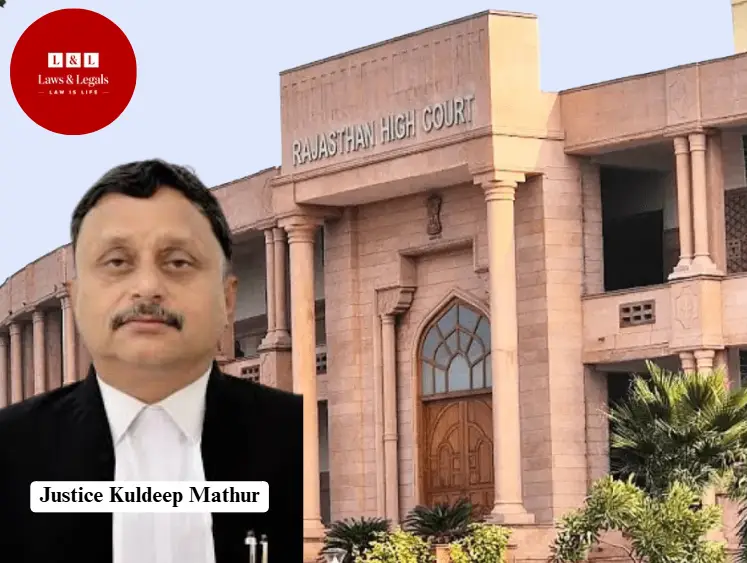
Justice Kuldeep Mathur dismissed the writ petition filed by Lalit Pratap Singh, an LDC appointed on compassionate grounds, challenging the orders treating him as having resigned from government service.
For the context, Singh remained absent from duty from July, 2013 to December, 2016, and again from December,2016 onwards, without sanctioned leave.
The department repeatedly asked him to return to duty and explain his absence. They even issued a public notice in Dainik Bhaskar, Pali, asking him to resume service, but he did not return.
Upon which, Singh attributed his prolonged absence to difficult family circumstances and the ill-health of himself and his aged mother. He argued that the authorities could not treat him as having resigned without first conducting a regular departmental enquiry.
HC rejects the argument
Rejecting the contention, the court explained that Rule 86(3) and Rule 86(4) deal with different situations.
“While Rule 86(3) concerns disciplinary action for wilful absence, Rule 86(4) specifically provides for deemed resignation where a government employee remains absent for more than five years, provided a reasonable opportunity is given to explain the absence.”
The Court also found that the employee had, in fact, been given several opportunities to explain his absence. He was called for personal hearings, asked to submit relevant documents and was given further opportunities to place his case before the authorities.
The Court found no substance in his claim that he had been denied a fair opportunity.
The Bench also noted that the petitioner’s application for voluntary retirement did not alter the position arising from his prolonged unauthorised absence.
The Court also found that the material placed on record did not warrant interference with the action taken by the authorities.
Justice Mathur further observed that while exercising jurisdiction under Article 226 of the Constitution, the High Court does not ordinarily act as an appellate court to re-appreciate evidence or substitute its own assessment for that of the competent authority.
Finding no legal infirmity in the State’s action, the High Court upheld the decision to treat Singh as having resigned under Rule 86(4)(b) and dismissed his writ petition.