

Jodhpur: The Rajasthan High Court has modified a Motor Accident Claims Tribunal award and directed the Insurance Company to pay ₹4.81 lakh compensation with annual interest to a minor injured in a road accident first, while granting it liberty to recover the amount from the vehicle owner and driver.
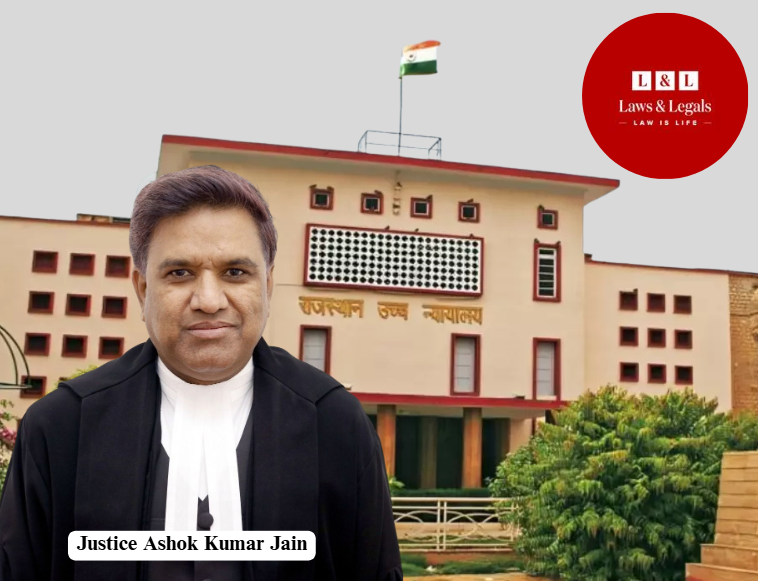
Justice Farjand Ali held that although the goods vehicle was being used to carry passengers without the requisite permit, complete exoneration of the Insurance Company was not warranted in the circumstances of the case.
Driver’s LMV Licence Cannot Be Treated as Invalid Merely for Want of Transport Endorsement
The Court found that the Tribunal had erred in concluding that the driver did not possess a valid licence merely because there was no separate authorisation to drive a transport vehicle.
The driving licence specifically authorised the driver to operate an “MCW with Gear LMV”, while the vehicle’s gross vehicle weight was recorded as 2,750 kg, placing it within the LMV category.
Court relied on the Supreme Court’s decisions and held that a driver holding an LMV licence is competent to drive a transport vehicle falling within the LMV class. Therefore, absence of a separate transport endorsement, by itself, could not constitute a breach of the policy conditions.
Carrying Passengers in Goods Vehicle Without Permit Was a Proven Breach
The Court, however, distinguished the issue of driving licence from the issue of unauthorised carriage of passengers.
Court observed “the learned Tribunal was justified in noticing a breach on the part of the owner inasmuch as the vehicle was being used for carrying passengers without a permit authorising such use. The said breach, therefore, cannot be completely ignored while determining the ultimate liability of Insurance Company, the finding regarding absence of a valid driving licence cannot be sustained merely on account of absence of a separate transport endorsement, having regard to the class and gross vehicle weight of the offending vehicle. The remaining breach relates to the unauthorised carriage of passengers without the requisite permit.”
Seating Capacity of 4+1 Did Not Create Passenger Coverage
The Court also rejected the argument that the policy’s reference to a 4+1 seating capacity meant that passengers were automatically covered.
It observed that the policy contained a limitation restricting use of the vehicle to the carriage of goods. Mere mention of seating capacity could not be treated as an independent contractual undertaking covering persons travelling in the vehicle contrary to the permitted use and without the requisite passenger permit.
Complete Exoneration of Insurer Not Justified: ‘Pay and Recover’
The Court then considered the crucial question
whether the established breach required the Insurance Company to be completely absolved from satisfying the award?
Relying on the principles laid down in Oriental Insurance Co. Ltd. v. Nanjappan and Amrit Paul Singh v. Tata AIG General Insurance Co. Ltd., the Court reiterated that even where a breach of policy conditions is established, the insurer may be directed to satisfy the award in the first instance and thereafter recover the amount from the owner and driver.
For the context, the claimant was only 10 years old when the accident occurred. In these circumstances, held that complete exoneration of the Insurance Company would not be the appropriate course; the court observed.
But the Court also clarified that directing the insurer to pay first does not make it ultimately liable to indemnify the owner. The insurer retains the right to recover the amount from the owner and driver responsible for the breach.
₹4.81 Lakh Compensation to Be Paid First by Insurer
Consequently, the High Court partly allowed the appeal and modified the Tribunal’s award.