






35 Rounds Fired at Neemrana Hotel and ₹5 Crore Extortion Demand Cited; Court Considers Seriousness of Allegations, Criminal Antecedents and Risk of Witness Intimidation
Jaipur: The Rajasthan High Court has rejected the bail plea of Manish, an accused in the case involving 35 rounds of firing at Hotel Highway King in Neemrana and an alleged demand for ₹5 crore in extortion. The Court dismissed his appeal against the Special NIA Court’s order refusing bail, observing that prolonged custody and delays in trial do not automatically entitle an accused to release.
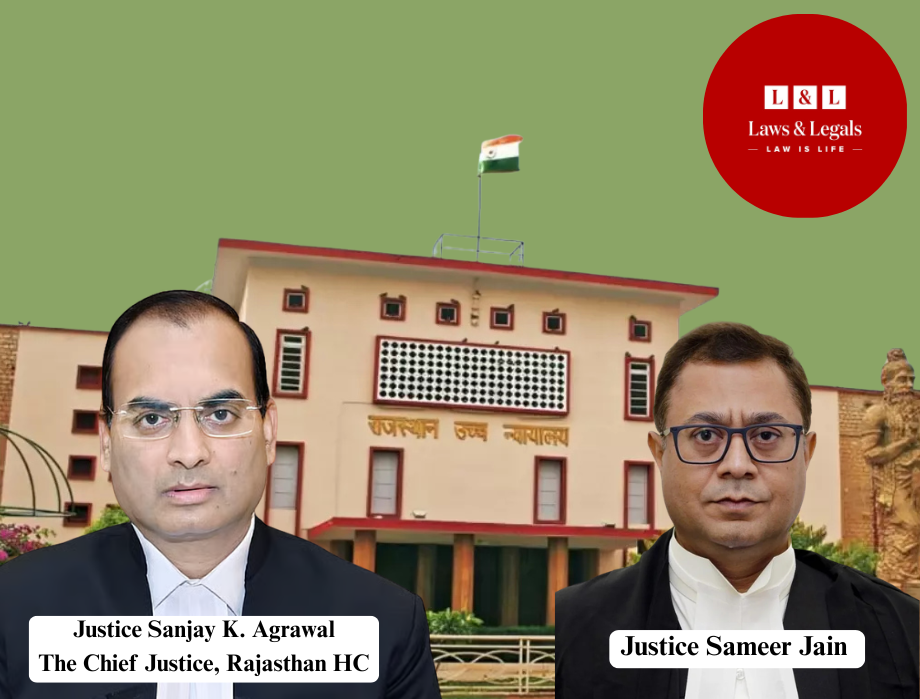
A division bench of Chief Justice Sanjay K. Agrawal and Justice Sameer Jain observed that although the length of detention and the pace of the trial are important considerations in bail matters, courts must also examine the seriousness of the allegations, the material collected during the investigation, the accused’s criminal antecedents and the possibility of absconding or influencing witnesses.
After considering these factors, the Court found insufficient grounds to grant bail to Manish. It clarified that its observations during the bail proceedings would not affect the trial court’s independent assessment of the case.
35 Rounds Fired at Hotel, ₹5 Crore Extortion Alleged
The case relates to an incident in the Neemrana police station area of Alwar district. According to the FIR registered on September 8, 2024, two unidentified armed persons allegedly fired around 35 rounds at Hotel Highway King.
The assailants allegedly threatened the person concerned and demanded ₹5 crore, warning of fatal consequences if the amount was not paid.
During the investigation, allegations of organised crime and conspiracy emerged. The National Investigation Agency (NIA) named Manish as an accused in the case. He has remained in custody since November 12, 2024.
The case involves Sections 308(4) and 111(3) of the Bharatiya Nyaya Sanhita (BNS), along with relevant provisions of the Arms Act.
Manish challenged the Special NIA Court in Jaipur’s order rejecting his bail application before the Rajasthan High Court.
Defence Argues Manish Was Implicated Without Independent Evidence
The defence argued that Manish had been implicated on the basis of a statement or interrogation note of a co-accused and that there was no independent and substantial evidence to justify his continued detention.
The lawyers referred to information obtained under the Right to Information Act, arguing that a woman named Manisha had not mentioned Manish’s name.
The defence also submitted that Manish was lodged in Bhondsi jail in Haryana at the time of the incident and was arrested in the present case while already in custody there. It argued that he should not be implicated merely because he is the brother of alleged Haryana gangster Kaushal Chaudhary.
The lawyers further submitted that Manish had been named in 21 criminal cases, but had been acquitted or the proceedings had concluded in several of them. They contended that the mere existence of previous cases could not establish his guilt in the present matter.
NIA Opposes Bail, Cites Criminal Antecedents and Risk to Witnesses
The NIA opposed the bail application, pointing to Manish’s record of 21 criminal cases and the seriousness of the allegations in the present matter.
The agency argued that acquittals in some previous cases could not be considered in isolation, particularly where witnesses had allegedly turned hostile in certain proceedings.
The NIA also referred to the alleged links of Manish’s brother, Kaushal Chaudhary, with criminal networks and the investigation into their alleged connections with foreign-based gangsters and the Khalistan Tiger Force.
The agency apprehended that Manish could abscond or influence witnesses if released on bail.
It also placed statements of two witnesses, recorded on August 13, 2025, before the Court in a sealed cover. The NIA described these statements as material connecting the accused to the alleged criminal activities.
Bail Hearing Cannot Become a Mini-Trial, Court Says
The High Court observed that a court deciding a bail application is not required to conduct a detailed examination of all evidence or determine the final reliability of every piece of material.
It said the Court must assess the material collected during the investigation in the context of the allegations without conducting a mini-trial at the bail stage.
The bench referred to Supreme Court judgments, including State of Uttar Pradesh v. Amarmani Tripathi, Anil Kumar Yadav v. State (NCT of Delhi) and Neeru Yadav v. State of Uttar Pradesh.
The Court observed that a co-accused’s statement cannot be examined in isolation from the remaining prosecution material to determine the bail application. Questions concerning its admissibility, reliability and evidentiary value would be examined at the appropriate stage of the trial.
The bench also clarified that the existence of previous criminal cases does not establish guilt in the present case, although criminal antecedents remain a relevant consideration when assessing a bail application.
No UAPA Charge Does Not Mean Bail Must Be Granted
The defence argued that the Unlawful Activities (Prevention) Act (UAPA) had not been invoked against Manish and that the restrictive bail conditions under Section 43-D(5) of the Act were therefore inapplicable.
The High Court accepted that the special statutory restriction under Section 43-D(5) could not be used to deny bail when the provision did not apply to the accused.
However, the bench clarified that the absence of this restriction did not automatically entitle Manish to bail.
The Court said the application still had to be assessed under the ordinary principles governing bail, including the gravity of the allegations, the investigation material, the accused’s criminal antecedents and the possibility of absconding or influencing witnesses.
Prolonged Custody and Trial Delay Must Be Weighed Against Other Factors
The defence submitted that Manish had remained in custody for more than 22 months and that the charge sheet and three supplementary charge sheets had been filed without substantial progress in the trial.
It relied on Supreme Court judgments recognising prolonged detention and delays in trial as important considerations in bail matters involving personal liberty.
The High Court referred to Union of India v. K.A. Najeeb and Satender Kumar Antil v. CBI, acknowledging that prolonged custody and trial delays must be considered while deciding bail.
However, the bench held that these factors could not be examined in isolation. They had to be weighed against the seriousness of the allegations, the material collected by the investigating agency and the potential risks associated with the accused’s release.
High Court Dismisses Bail Appeal
After considering the allegations of firing, the demand for ₹5 crore in extortion, the alleged organised criminal conspiracy, the prosecution material and the accused’s criminal antecedents, the division bench concluded that sufficient grounds for granting bail had not been established.
The High Court accordingly dismissed Manish’s appeal under Section 21 of the National Investigation Agency Act, 2008, upholding the Special NIA Court’s decision to reject bail.
The bench clarified that it had not found Manish guilty merely because of his relationship with his brother or the alleged links with criminal networks. The truth of the allegations will be determined during the trial.
The Court further stated that its observations in the bail proceedings should not influence the trial court’s independent decision on the merits of the case.