




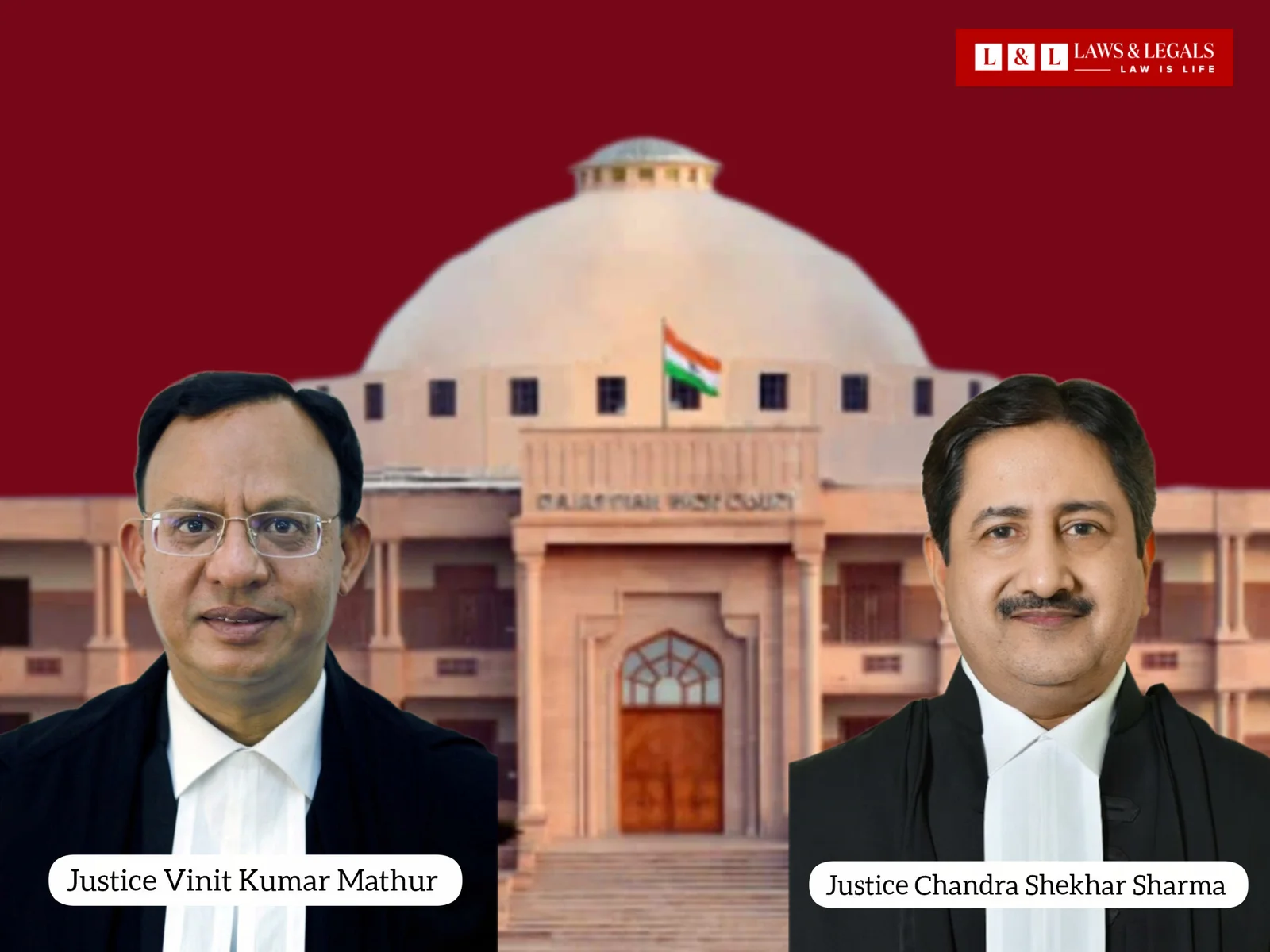
Jodhpur: The Rajasthan High Court has dismissed the State Government’s appeal against the regularisation of three Veterinary Officers appointed in the Animal Husbandry Department in 2013. The Court upheld the single judge’s order directing the department to regularise their services after completion of 10 years from their initial appointment, along with all consequential benefits.
A division bench of Justice Vineet Kumar Mathur and Justice Chandrashekhar Sharma held that employees cannot be denied the benefit of regularisation merely because their services were terminated in between and they continued working later under court orders.
The Court noted that the three officers had served the department for more than 10 years and were appointed through a selection process. Their claims for regularisation, therefore, had to be considered in light of the legal principles laid down by the Supreme Court.
What Is the Case?
On March 14, 2013, the Animal Husbandry Department issued an advertisement for recruitment to 500 Veterinary Officer posts under Rule 26 of the Rajasthan Animal Husbandry Subordinate Service Rules, 1963.
Following the selection process, the petitioners were appointed as Veterinary Officers in 2013. They are Dr. Ramakant Soni, currently posted at the Veterinary Hospital in Akoda, Didwana-Nagaur; Dr. Surendra Kumar, posted at the Government Veterinary Hospital in Uttaradabas, Bhadra, Hanumangarh; and Dr. Shahzad Ahmed Khan, posted at the Government Veterinary Hospital in Danthal, Bhilwara.
Around three years after their appointment, the department terminated their services. The officers challenged the termination orders before the Rajasthan High Court.
The High Court allowed their petitions, following which they continued working in the department under court orders.
In 2020, the officers approached the State Government seeking regularisation of their services. However, the department did not grant their request.
They then filed a writ petition before the High Court. On November 28, 2025, a single judge ruled in their favour and directed the State Government to regularise their services after they completed 10 years from their initial appointment, along with all consequential benefits.
State Government Relies on Supreme Court’s Uma Devi Judgment
The State Government and the Animal Husbandry Department challenged the single judge’s order by filing a special appeal before the division bench.
The Additional Advocate General appearing for the State argued that the officers had been appointed on a purely temporary and stop-gap basis under Rule 26. Their appointments, according to the government, were not made through the regular appointment process and therefore did not make them eligible for regularisation.
The State relied on the Supreme Court’s judgment in State of Karnataka v. Uma Devi (2006) 4 SCC 1, arguing that regularisation of irregular appointments is subject to specific conditions laid down by the Court.
It also argued that the officers could not claim 10 years of uninterrupted service because they had continued working during the intervening period only due to interim court orders.
The State Government, therefore, sought to set aside the single judge’s order.
Employees Rely on Supreme Court’s Jaggo Judgment
Opposing the appeal, counsel for the officers relied on the Supreme Court’s judgment in Jaggo v. Union of India & Ors. (2024 SCC OnLine SC 3826).
They argued that the appointments were not illegal and had been made through a selection process under Rule 26. The officers had worked in the department since 2013, and their services had been terminated only once. They had challenged the termination and obtained relief from the High Court.
The officers also argued that the Supreme Court had clarified in the Jaggo case that an interruption caused by termination of service does not, by itself, take away an employee’s right to be considered for regularisation if the other required conditions are met.
They also cited the Rajasthan High Court’s judgment in Mohd. Sadiq v. State of Rajasthan, dated March 16, 2026. In that case, the Court had directed regularisation and consequential benefits after completion of 10 years of service from the initial appointment in similar circumstances.
High Court Examines Jaggo and Vinod Kumar Judgments
After hearing both sides, the division bench examined several Supreme Court judgments, including Jaggo v. Union of India & Ors. (2024).
The High Court noted that the Supreme Court had held that employees performing work of a regular and continuing nature for a long period cannot have their claims rejected only because their initial appointments were described as temporary or part-time.
The bench also observed that the Uma Devi judgment was not meant to protect illegal appointments. The Supreme Court had distinguished between illegal and irregular appointments.
Where eligible candidates are appointed against sanctioned posts and have worked for 10 years or more under the relevant conditions, their claims for regularisation can be considered.
The High Court also referred to the Supreme Court’s judgment in Vinod Kumar & Ors. v. Union of India & Ors. (2024) 9 SCC 327. It noted that employment-related rights cannot be decided only on the basis of the terms of an employee’s initial appointment. The actual period of service, nature of work and duties performed also need to be considered.
The bench further referred to Dharam Singh v. State of U.P. (2025 SCC OnLine SC 1735), Prem Singh v. State of U.P. (2019) 10 SCC 516 and Bhola Nath v. State of Jharkhand (2026 INSC 99).
Termination Cannot Be Used to Deny Regularisation Benefits
The division bench also made important observations about the department’s approach.
It held that terminating an employee’s services cannot become a way to deny them the benefits of regularisation.
The Court observed that when regular and continuing work is available in a department, repeatedly making temporary appointments instead of regular appointments can keep employees away from the benefits of regular service and regular pay.
In light of the Supreme Court judgments, the bench held that the three officers were entitled to have their services regularised. It found no error in the single judge’s decision.
State Government’s Appeal Dismissed, Single Judge’s Order Upheld
After considering the arguments, the Rajasthan High Court dismissed the State Government’s special appeal, finding no grounds to interfere with the earlier order.
The division bench upheld the single judge’s order dated November 28, 2025, directing the regularisation of the three Veterinary Officers after completion of 10 years of service from their initial appointment, along with all consequential benefits.
The ruling upholds the officers’ claim for regularisation and the benefits granted by the single judge.