




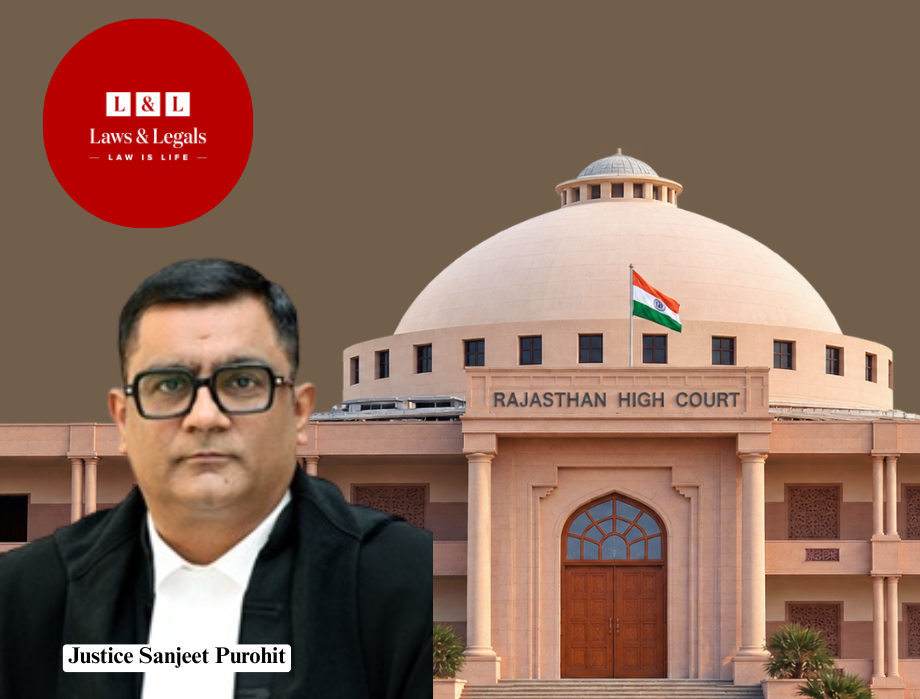
Counsel’s Demise Was Genuine Cause for Non-Appearance; HC Says Litigant Cannot Be Made to Suffer for Advocate’s Default; ‘Sufficient Cause’ Must Prevail Over Procedural Technicalities
Jodhpur: The Rajasthan High Court Jodhpur has come to the aid of a 70-year-old woman, holding that her failure to appear before the trial court was sufficiently explained by the demise of her conducting advocate and that substantial justice cannot be defeated by adopting a hyper-technical approach to procedural law.
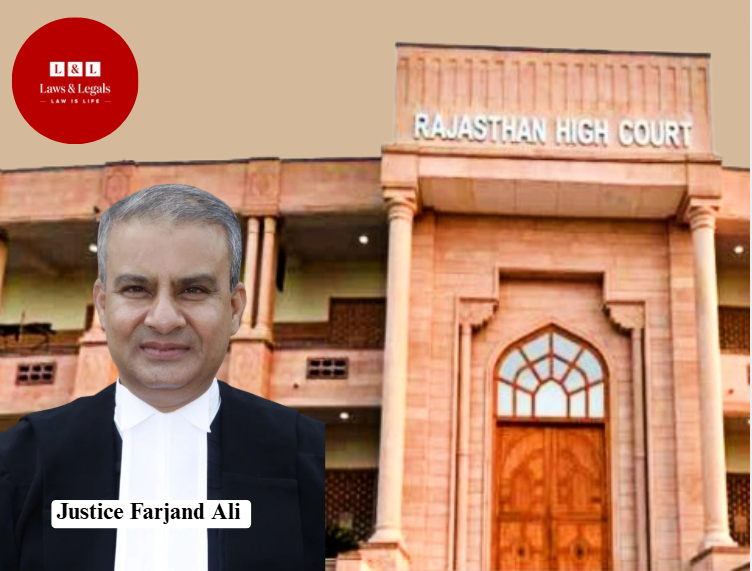
Justice Sanjeet Purohit allowed the appeal filed by Smt. Baljeet Kaur and set aside the order by which the trial court had refused to recall the ex-parte proceedings against her.
The Court also set aside the ex-parte judgment and decree passed against her and restored the civil suit for adjudication on merits.
For the context, the matter relates to 25 bighas (6.325 hectares) of agricultural land in Sri Ganganagar district. Baljeet Kaur, who claimed to be a bona fide purchaser under a registered sale deed dated May, 2004, had contested the suit through her advocate for several years.
70-Year-Old Woman Unaware of Counsel’s Demise
She had entered appearance in the suit through a Counsel, filed her written statement and contested the proceedings through her advocate for several years. However, during the pendency of the suit, her conducting counsel, Advocate Dharampal Godara, passed away.
When the matter was taken up on July, 2024, neither Baljeet Kaur nor her counsel appeared before the trial court. The trial court consequently directed that the suit proceed ex-parte against the defendants.
The Court noted that the appellant was an aged woman of about 70 years residing in a distant rural area and had remained unaware of her advocate’s demise and the consequent developments in the case. After coming to know of the situation, she engaged another counsel and moved an application seeking recall of the ex-parte proceedings.
Explanation for Absence Was Genuine and Bona Fide
The High Court held that the explanation furnished by the appellant for her absence on was genuine and bona fide.
Justice Purohit observed that “it was neither uncommon nor beyond credibility that an aged litigant living in a remote rural area may not immediately become aware of the death of her counsel or remain informed about the day-to-day proceedings, particularly when she had entrusted the conduct of the litigation to her advocate.”
The Court further noted that where the absence is not attributable to negligence or lack of bona fides of the litigant, she cannot be penalised for the default of her advocate.
‘Sufficient Cause’ Has to Be Construed Liberally
The High Court placed considerable emphasis on the expression “sufficient cause” under Order IX Rule 13 CPC.
The Court held that the provision has to be interpreted in a liberal and justice-oriented manner, with the primary objective of ensuring substantial justice between the parties.
The Court observed that procedural law is intended to facilitate adjudication and not to defeat substantive rights through technicalities.
The court observed that the expression “sufficient cause” is elastic and cannot be confined within any strait-jacket formula
Relying upon Supreme Court precedents, the Court reiterated that the relevant consideration has to be given to whether the defendant genuinely intended to appear and whether the absence was caused by circumstances for which the defendant could not reasonably be blamed.
Previous Conduct Cannot Override Sufficient Cause on Crucial Date
The Court also clarified that while examining an application under Order IX Rule 13 CPC, the crucial inquiry is whether the defendant had sufficient cause for remaining absent on the date when the court proceeded ex-parte.
In the matter, the trial court had relied upon the subsequent dismissal of Baljeet Kaur’s application under Order IX Rule 7 CPC for non-prosecution to conclude that she had not acted diligently.
The Court disagreed, further observed that the earlier application had been dismissed for non-prosecution and not on merits. Therefore, it could not conclusively establish that there was no sufficient cause for her absence on July 19, 2024.
‘Litigant Cannot Suffer for Counsel’s Default’
The Court also relied upon the principle laid down by the Supreme Court in Rafiq v. Munshilal, observing that once a litigant has selected an advocate, briefed the lawyer and done what was reasonably expected, the litigant ordinarily cannot be made to suffer because of the inaction, omission or default of the advocate.
The Court found that the present appellant had not abandoned her case. She had appeared in the proceedings, filed her written statement and contested the litigation for years. Upon learning about the ex-parte proceedings, she also acted promptly.
Application Within 9 Days of Ex-Parte Decree
The Court further took note of the appellant’s prompt action after the ex-parte decree was passed.
The decree was pronounced on January, 2025, and Baljeet Kaur moved the application within nine days, on February 7, 2025.
The Court held that such conduct demonstrated vigilance rather than negligence.
The Court also found that serious prejudice had been caused to the appellant because the plaintiff’s evidence remained unchallenged and the appellant was deprived of the opportunity to lead evidence on issues concerning her rights in the property.
The Court Holding that substantial justice must prevail over procedural technicalities, the High Court allowed the appeal, Restores Suit and Sets Aside Ex-Parte Decree