


Rajasthan HC Takes Serious Note of Jodhpur Building Safety, Orders Immediate Restoration and Push for 50+10 New Courtrooms
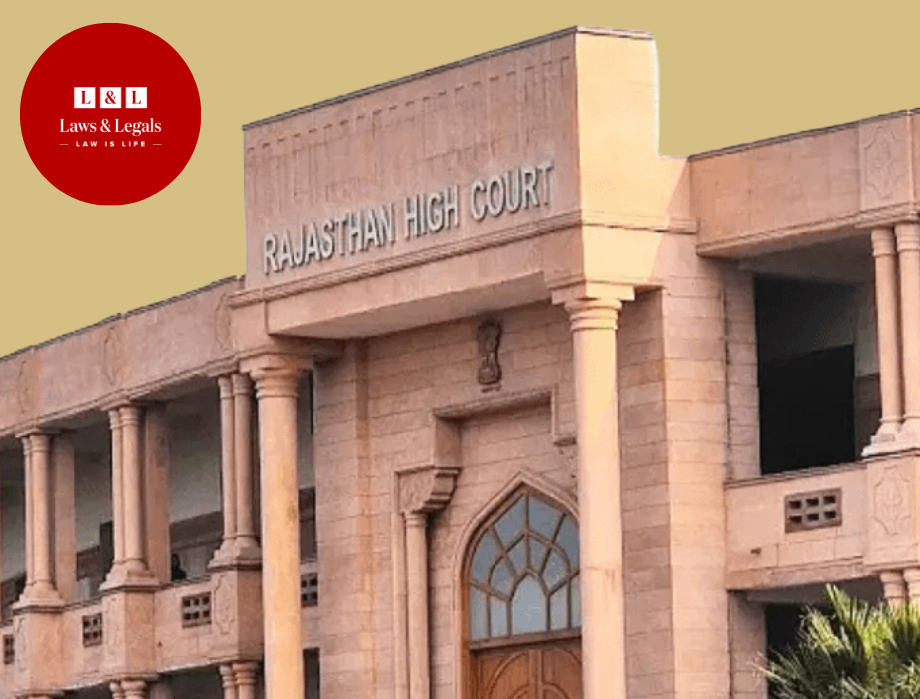
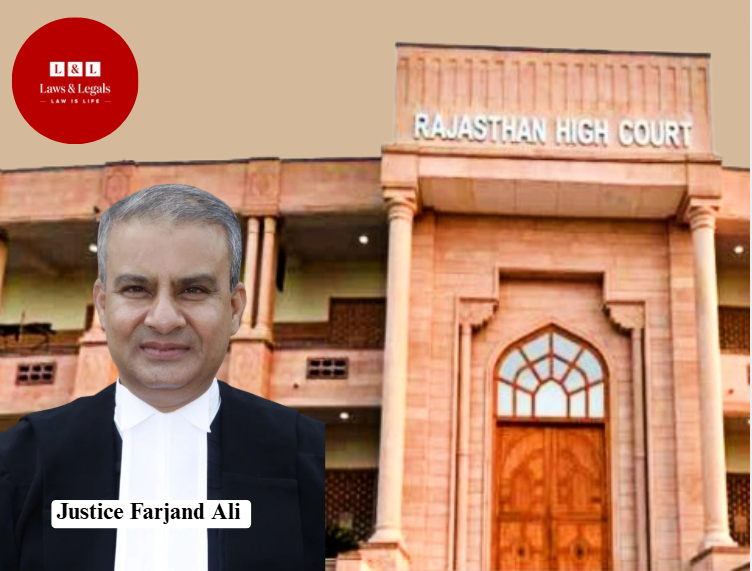
Jodhpur: The Rajasthan High Court has directed the State Government to take immediate steps to restore and strengthen its main building at Jodhpur, while also moving forward with the proposal for a new building with 50 courtrooms, expandable by another 10.
A Division Bench comprising Chief Justice Sanjay K. Agrawal and Justice Vinit Kumar Mathur passed the directions in the suo motu proceedings concerning the structural safety of the High Court building and the Central Dome.
The detailed order was passed after the hearing on September 15, 2026. The court observed Judiciary is one of the three essential pillars of our constitutional democracy and it cannot be treated merely as an ordinary government department and adequate judicial infrastructure is not a matter of executive discretion but an essential Constitutional requirement.
The Court also observed that the administration of justice is an essential constitutional and sovereign function of the State.
The Court directed the State authorities to take immediate steps to complete the restoration work and to process the proposal for construction of 50 new courtrooms, with provision to add 10 more, adjoining the existing High Court building. The matter has been listed for further hearing on October 5, 2026.
IIT Bombay Report Flagged Serious Risk to Central Dome
The High Court had taken suo motu cognizance of the structural condition of the Jodhpur building on August 10, 2026.
During the proceedings, the Court was informed that the Central Dome, standing approximately 21 metres high, was in a state of imminent collapse, according to the expert opinion of IIT Bombay.
The Court noted that its collapse could put the lives of judges, advocates, staff and other people present on the premises at serious and irreversible risk.
At the August 24 hearing, the Court had expressed concern over the progress of the restoration work as well as the investigation into the criminal case connected with the condition of the building. It had directed that the restoration work be expedited.
Final IIT Report Says Building Can Be Repaired
Appearing for the State, Advocate General Rajendra Prasad, assisted by Anirudh Singh Shekhawat, informed the Court that IIT Bombay had now submitted its final report dated September 3, 2026.
According to the report, the existing building can be repaired and its structural strength restored through the recommended repair scheme. The work is expected to extend the building’s residual life by at least 20 years.
The report, however, noted that the success of the repairs would depend on the quality of execution, the durability of the chemical materials used and proper maintenance after rehabilitation.
Nearly 40% of Building Needs Urgent Attention
The Structural Rehabilitation Report placed before the Court stated that nearly 40% of the building requires urgent or immediate attention.
It recommended a priority-based rehabilitation programme for these areas. The remaining 60% of the building should also be repaired, with precautionary measures taken to prevent or delay similar deterioration.
The report further recommended periodic inspections and routine maintenance to keep the building dry and prevent further damage.
Entire Rehabilitation Work Expected in 24 Months
The State informed the Court that the rehabilitation work has been divided into different phases.
Phase-I covers around 11,000 sq. metres and is expected to be completed by October 31, 2026.
Phase-II covers around 12,000 sq. metres of highly distressed areas. The work is expected to begin within a month and be completed within 12 months.
The first part of Phase-III will cover another 10,000 sq. metres and is scheduled to begin in the seventh month and finish by the 24th month. The second part will involve preventive maintenance of around 33,000 sq. metres.
The entire rehabilitation work is therefore expected to be completed within approximately 24 months.
₹117.65 Crore Estimated for Rehabilitation
The estimated cost of repairing and rehabilitating the main High Court building is around ₹117.65 crore.
Of this, ₹27.41 crore has been sanctioned for Phase-I and ₹30.24 crore for Phase-II. The remaining ₹60 crore for Phase-III is under the process of sanction.
The Court was also informed that the estimated ₹117.65 crore covers only the main High Court building. It does not include the Advocates’ Chambers, the Advocate General–Additional Advocate General Building or other structures within the High Court premises.
Repair Cost More Than Half of Original Construction Budget
The Court was informed that the original budget for construction of the New High Court Building at Jhalamand, Jodhpur, was approximately ₹220 crore.
In comparison, the estimated cost of repairing and rehabilitating the existing main building is around ₹117.65 crore, which does not include the Advocates’ Chambers or the AG-AAG building.
Court Seeks Dedicated Monitoring Team
The State informed the Court that two nodal officers, one each from PWD and RSRDC, have been appointed to monitor the restoration work.
Eight officers have also been assigned inspection and monitoring duties on a daily, alternate-day, weekly and fortnightly basis. Four PWD officers were transferred on September 5 for continuous survey, supervision and inspection, and a dedicated team was constituted on September 11.
Senior Advocate Sachin Acharya, appearing for the High Court, suggested that a permanent dedicated team headed by an officer of the rank of Chief Engineer should be constituted for focused and continuous monitoring.
The team should work full-time on the restoration project and should not include officers who had earlier been associated with the construction of the Jhalamand High Court building.
Action Against Contractors, Chargesheets Against Officials
The State informed the Court that debarment orders have been passed against contractors.
It also stated that charge-sheets proposing major penalties have been issued against public servants. The departmental proceedings are expected to be completed within one or two months after providing the concerned officials an opportunity of hearing.
Criminal Investigation Also Under Court’s Watch
The Court was also informed about the investigation into the criminal case relating to the condition of the building.
The Jodhpur Police Commissioner apprised the Court of the investigation methodology and progress. The Director General of Police, Rajasthan, also informed the Bench about the review of the action taken so far.
The Court was told that ADG V.K. Singh, who is also a civil engineer, would supervise the investigation, with efforts being made to ensure an effective and timely probe.
₹1.5 Crore Sanctioned for DPR of New Court Building
The State also informed the Court that financial sanction of ₹1.5 crore has been granted for preparing a Detailed Project Report for an extended court building comprising 50 courtrooms, expandable by another 10 courtrooms. The sanction was granted by an order dated September 11, 2026.
‘Judiciary Cannot Be Treated Like an Ordinary Government Department’
In a significant observation, the Bench said that the judiciary is one of the three essential pillars of constitutional democracy and cannot be treated merely as an ordinary government department for providing infrastructure and administrative facilities.
The Court said that the administration of justice is an essential sovereign and constitutional function of the State.
The Bench further observed that adequate judicial infrastructure is not a matter of executive discretion or government favour. It is an institutional necessity arising from the constitutional obligation to ensure effective access to justice and meaningful protection of rights under Article 21.
Referring to the Supreme Court’s proceedings in the All India Judges’ Association matters, the Court emphasised the need for adequate infrastructure, proper working conditions, courtrooms, staff and other administrative resources for the effective functioning of the judiciary.
Advocates Who Appeared
The State was represented by Advocate General Rajendra Prasad, assisted by Anirudh Singh Shekhawat.
Senior Advocate Sachin Acharya appeared for the High Court, assisted by Chayan Bothra and Sarthak Asopa.
Other advocates appearing for the petitioners included Senior Advocate Anand Purohit, Kapil Purohit, Ranjeet Joshi, Kapil Bissa, Senior Advocate Manish Shishodia, Dipesh Birla, Dilip Singh Udawat, Arun Kumar, Senior Advocate Vikas Balia, Priyansh Arora, Ankur Mathur, Sheetal Kumbhat, Suresh Kumbhat, Anil Vyas and Vijay Choudhary, among others.
The High Court directed the State authorities to take immediate steps to complete the restoration work, process the proposal for the 50+10 new courtrooms, and take action against officials found responsible in accordance with law. The matter will next be heard on October 5, 2026.