




“A Pleading Is Not Evidence; an Amendment Is Not a Decree”: HC Clarifies That Amendment Does Not Mean Ownership Claim Has Been Accepted.
Jodhpur: The Rajasthan High Court has dismissed a writ petition filed by Maharaj Dalip Singh challenging the amendment of pleadings in a property partition dispute involving the Jodhpur Royal Family Property Dispute.
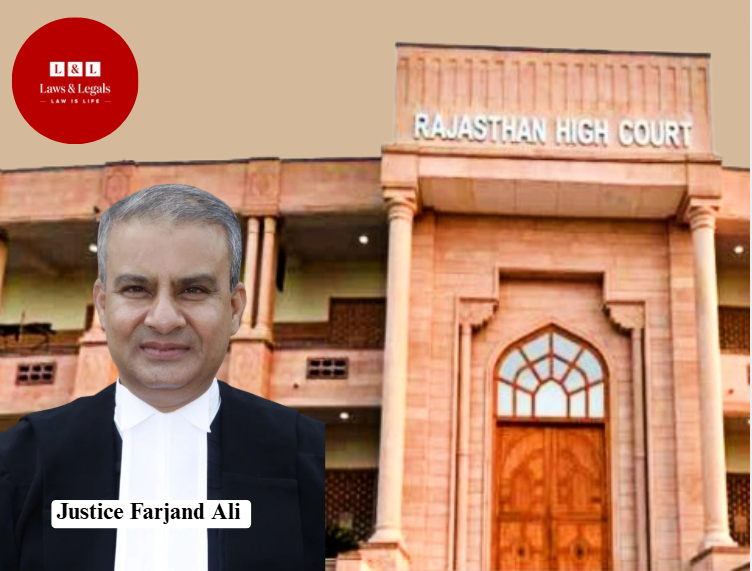
Justice Farjand Ali upheld the 2013 order of the Additional District Judge which allowed Maharaj Rajendra Singh to amend his plaint under Order VI Rule 17 of the Code of Civil Procedure.
Dispute Over Sardar Guest House, Pali Land
The case concerns succession and partition of properties left by late Maharaj Devi Singh, including the Sardar Guest House on Residency Road, Jodhpur, and agricultural land at Dudni village in Pali.
Maharaj Rajendra Singh had originally claimed a share in the properties on the ground that they belonged to Maharaj Devi Singh and devolved upon the heirs under the Hindu Succession Act.
He later sought to amend the plaint, claiming that the properties were actually part of the Joint Hindu Family estate of late Maharajadhiraj Ummaid Singhji, while the patta in favour of Maharaj Devi Singh’s name was only for use and enjoyment.
Maharaj Dalip Singh Opposed the Amendment
Maharaj Dalip Singh argued that the amendment introduced an entirely new and inconsistent case, sought to withdraw earlier admissions and revived issues allegedly dealt with in previous family property litigation.
He also raised objections based on res judicata, constructive res judicata, estoppel, partial partition and non-joinder of necessary parties.
“Partition Remains the Core Dispute”
Rejecting the challenge, the High Court held that the properties, parties and principal relief of partition remained unchanged. The amendment only sought to elaborate the plaintiff’s case regarding the nature and source of title to the properties.
The Court observed that a change in the factual foundation or legal interpretation of a claim does not necessarily change the nature of the suit. Since the dispute continued to concern partition of the same properties, the amendment could not be treated as introducing a wholly new cause of action.
“Amendment Is Not a Finding on Ownership”
Importantly, the Bench clarified that allowing the amendment does not mean the Court has accepted the plaintiff’s claim of ownership.
The court also observed that “at the stage of amendment the court does not conduct mini-trial into the truth. Mere allowance of the amendment cannot be construed as either an adjudication or a pronouncement that the suit must ultimately succeed”
Whether the properties were joint family assets, what legal effect the pattas carry and what share, if any, the parties are entitled to will be decided at trial after pleadings and evidence.
Earlier Litigation, Res Judicata Left Open
The Court also declined to conclusively decide the objections based on earlier litigation at the amendment stage. It held that questions of res judicata and constructive res judicata require examination of the complete records, issues, parties and earlier judgments.
Defendants yet to place their defence
The Bench noted that the amendment was allowed at an early stage, before the defendants had filed their written statements. They therefore continue to have the opportunity to challenge the amended pleadings and raise all available legal and factual defences.
HC Says Amendment Can Avoid Multiple Property Disputes
Court observed that court procedures should help resolve the entire dispute in one case rather than lead to multiple proceedings. It held that allowing the amendment would enable the parties to raise all issues concerning the disputed properties.
Writ Petition Dismissed, Trial to Continue
The High Court ultimately dismissed Maharaj Dalip Singh’s writ petition and affirmed the trial court order.