






New Delhi: In a significant relief for thousands of homebuyers, Supreme Court has ruled that courts can “lift the corporate veil” during insolvency proceedings if required, especially in cases where real estate companies operate through closely linked subsidiary structures.
The judgment came in a case involving Earth Infrastructures Limited (EIL), whose multiple housing projects had stalled around 2016, leaving homebuyers in uncertainty.
The company had structured its projects through several subsidiary entities, although the effective control remained with the parent company.
When insolvency proceedings were initiated against EIL in 2018, a key legal issue emerged—whether the assets of subsidiary companies could be included in the Corporate Insolvency Resolution Process (CIRP) of the holding company.
The dispute centered around ownership of land and project assets.
The Greater Noida Industrial Development Authority argued that the projects were legally owned by separate subsidiary companies and therefore could not be included in EIL’s insolvency process.
Accepting this argument, the National Company Law Appellate Tribunal had earlier set aside an approved resolution plan.
However, Supreme Court found this approach flawed, noting that excluding subsidiary assets would make it nearly impossible to complete the projects and would severely prejudice homebuyers.
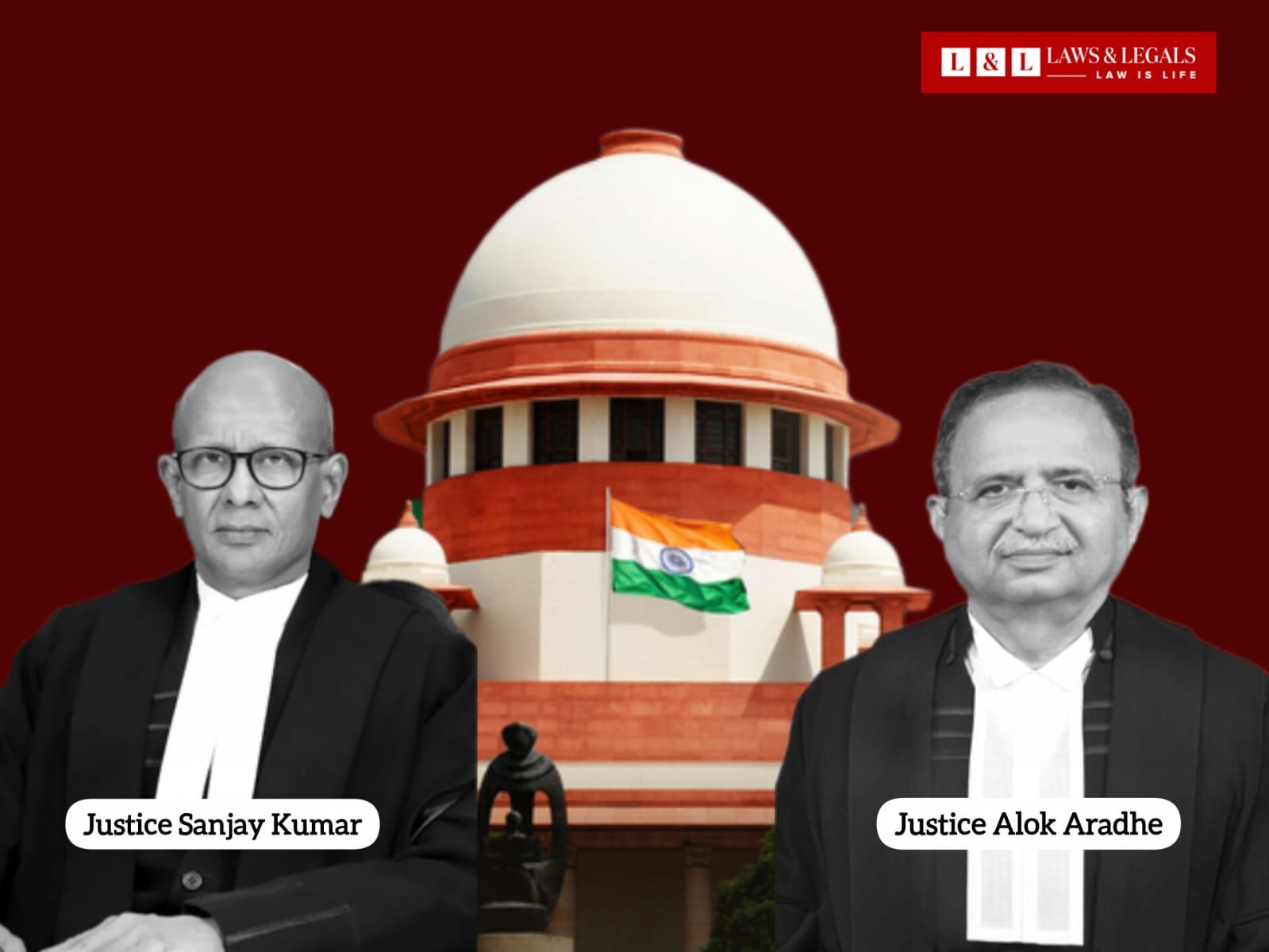
A bench comprising Justice Sanjay Kumar and Justice Alok Aradhe observed that the subsidiary companies were merely a “front,” while the real control and decision-making lay with the parent company.
The Court held that when corporate entities appear distinct only on paper but function as a single economic unit, the law permits lifting the corporate veil to ascertain the true nature of control.
Emphasizing the broader objective of insolvency law, the Court stated that CIRP is not limited to corporate restructuring but also aims to protect stakeholders, particularly homebuyers.
It noted that excluding the assets of subsidiary companies would leave projects incomplete and result in significant financial loss to investors.
Setting aside the NCLAT’s order, Supreme Court restored the resolution plan approved by the National Company Law Tribunal and allowed the successful resolution applicant to proceed with completion of the projects.
The ruling is being seen as a landmark in corporate and insolvency jurisprudence.
It reinforces the principle that courts can look beyond technical corporate structures to ensure justice and prevent misuse of legal frameworks, particularly in cases where the interests of thousands of homebuyers are at stake.