



Jodhpur: In a significant matrimonial case, the Rajasthan High Court has set aside a divorce decree and restored the marriage of a couple, after the husband and wife told the Court that they had resolved their differences and wanted to resume their married life.
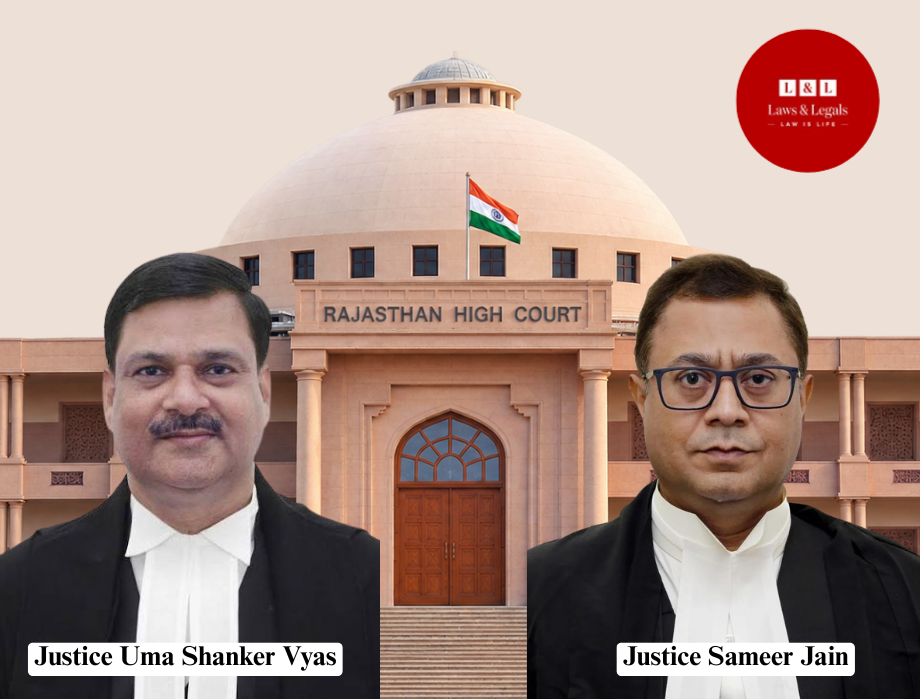
A Division Bench comprising Justice Uma Shankar Vyas and Justice Sameer Jain allowed the appeal filed by the wife, Saraswati, and her husband, Amit, observing that when spouses voluntarily resolve their differences and are willing to live together again, courts should, where legally permissible, facilitate reconciliation and peace.
Divorce Decree Passed in 2024
The couple had married on October 23, 2015. The husband had filed a divorce petition, which was allowed by the Family Court on 30 November, 2024.
The wife challenged the divorce decree before the High Court.
While the appeal was pending, the matter was referred to the Mediation Centre, but the mediation did not result in a settlement.
However, during the High Court proceedings, the couple personally appeared before the Bench. Following interaction and counselling by the Court, both agreed to end their differences and resume living together.
Daughter’s Welfare Influenced Reconciliation
The couple told the Court that they had voluntarily decided to restore their marital relationship and also referred to the welfare and future of their minor daughter as an important reason for their decision.They wanted their daughter to receive the love, care, companionship and emotional security of both parents.
“Marriage Is More Than a Legal Bond”
The High Court observed that a marriage is not merely a legal bond between two individuals but also carries emotional, familial and social dimensions.
The Bench said that when spouses, after mature consideration, voluntarily decide to resume their married life, such subsequent developments should be given due importance within the limits of law. If both the parties have resolved their differences than continuing litigation will serve no purpose.
The Court emphasised that matrimonial disputes are not confined to legal claims but are closely connected with human relationships and family lives.
Court Refers to Shiva-Parvati and Nala-Damayanti
Justice Sameer Jain began the judgment with a reference to Shiva and Parvati, observing that Hindu tradition views marriage not merely as a contract between two individuals but as a sacred union.
Referring to their relationship, the Court noted that even after separation and difficult phases, companionship and love can be restored.
The Bench also referred to the Nala-Damayanti episode from the Mahabharata, observing that circumstances may separate a husband and wife, but love and trust can bring them together again.
SC “Matrimonial Litigation Should Not Defeat Reconciliation”
The High Court noted that the Supreme Court has, in several decisions, emphasised that matrimonial litigation should not become an end in itself and that the possibility of family reconciliation should receive appropriate consideration where circumstances permit.
The Court observed that the purpose of judicial proceedings in matrimonial matters is not merely to determine legal rights or wrongdoing, but also, where possible, to facilitate a just and humane resolution.
Divorce Decree Set Aside, Marriage Restored
The Bench therefore set aside the divorce decree and restored the marriage, observing that when both spouses voluntarily choose to reunite, the divorce decree should not stand in the way of their reunion.