





pleadings must be the foundation of evidence; parties cannot introduce a new case at the evidence stage; Article 227 cannot be used to re-appreciate facts
Jodhpur: The Rajasthan High Court has refused to allow a defendant to introduce a handwriting expert’s report at the evidence stage of a civil suit, holding that a party cannot use later evidence to build a defence that was never pleaded in its written statement.
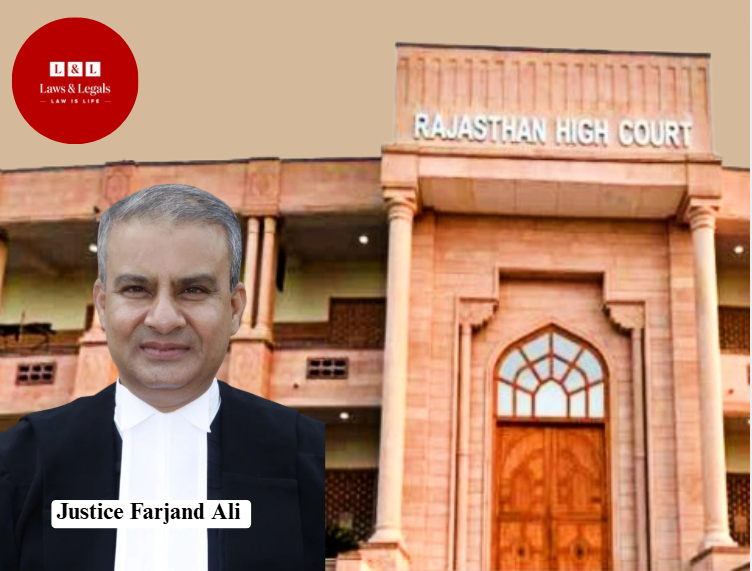
Justice Farjand Ali dismissed the petitions arising from a suit for specific performance of a contract and recovery of possession, holding that a handwriting expert’s opinion introduced at the evidence stage could not be treated as a mere clarification of an existing plea when no such plea had been raised earlier.
The dispute arose after the case had already entered the evidence stage, when the petitioner sought to place a handwriting expert’s report on record regarding the signature on the agreement in question.
The trial court refused to accept the report and also ordered removal of the handwriting expert’s affidavit from the record.
The Court noted that the petitioner had not specifically pleaded in the written statement that the signature on the agreement was forged or fabricated. No foundation had also been laid for seeking a handwriting expert’s opinion.
‘Evidence cannot create a new case’
The Court emphasised that pleadings are the foundation of a party’s case and evidence must remain within the scope of those pleadings.
A party cannot first introduce evidence and then use that evidence to create a new defence.
Allowing such, could change the nature of the dispute at an advanced stage of the trial and cause prejudice to the opposite party.
Article 227 is not an appellate power
The Court also reiterated the limited scope of its supervisory jurisdiction under Article 227 of the Constitution.
The court observed that this jurisdiction is not an appeal in disguise and the High Court does not ordinarily re-appreciate evidence merely because another view may be possible.
Court dismissed the petition and upheld Trial court’s reasoning.