





Court says Tribunal cannot decide seriously disputed facts merely on pleadings; failure to frame issues and record evidence violated natural justice.
Jodhpur: In a significant ruling on the scope of arbitral proceedings and the principles of natural justice, the Rajasthan High Court has set aside an arbitral award passed in favour of a construction contractor, holding that the Tribunal could not have adjudicated serious and disputed questions of fact merely on the basis of pleadings, without framing the issues in dispute or recording evidence.
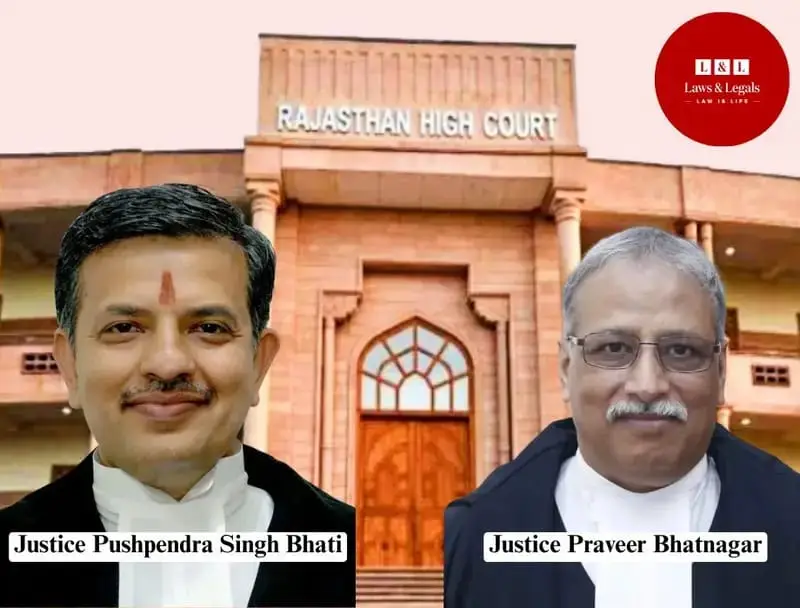
A Division Bench comprising Justice Dr. Pushpendra Singh Bhati and Justice Praveer Bhatnagar allowed the appeal filed by the Executive Engineer, Public Works Department, Kuchaman City, Nagaur, against M/s Trimurti Construction, and set aside both the arbitral award and the order of the Commercial Court, Ajmer, which had upheld the award.
The dispute arose from a ₹6.35-crore PWD work order issued on May 15, 2013. The work could not proceed due to resistance from local residents, following which the department withdrew the work order. The contractor subsequently initiated arbitration and claimed compensation, including losses allegedly suffered due to idling of labour, machinery and staff.
The PWD contested the claims through a detailed written reply, specifically disputing the contractor’s factual assertions.
Despite these rival versions, the Tribunal neither framed the disputed issues nor recorded oral or documentary evidence before deciding the matter in favour of the contractor.
The High Court held that the Commercial Court had approached the matter from the wrong perspective by focusing on whether evidence could be re-appreciated under Section 34 of the Arbitration and Conciliation Act.
The Bench clarified that the real question was whether evidence ought to have been recorded by the Tribunal in the first place, given the serious factual disputes between the parties.
Relying on ONGC v. Saw Pipes, Bharat Coking Coal v. L.K. Ahuja and Unibros v. All India Radio, the Court held that deciding disputed facts solely on pleadings, without framing issues or recording evidence, violates natural justice and falls foul of the public policy test under Section 34(2)(b).
Accordingly, the Division Bench allowed the PWD’s appeal and set aside both the Commercial Court’s order and the arbitral award.