






Jaipur: The Rajasthan High Court has ruled that compassionate appointment cannot be denied merely because 15 years have passed since the death of a government employee, particularly where the dependent was a minor at the time of death and approached the authorities within a reasonable period after attaining majority.
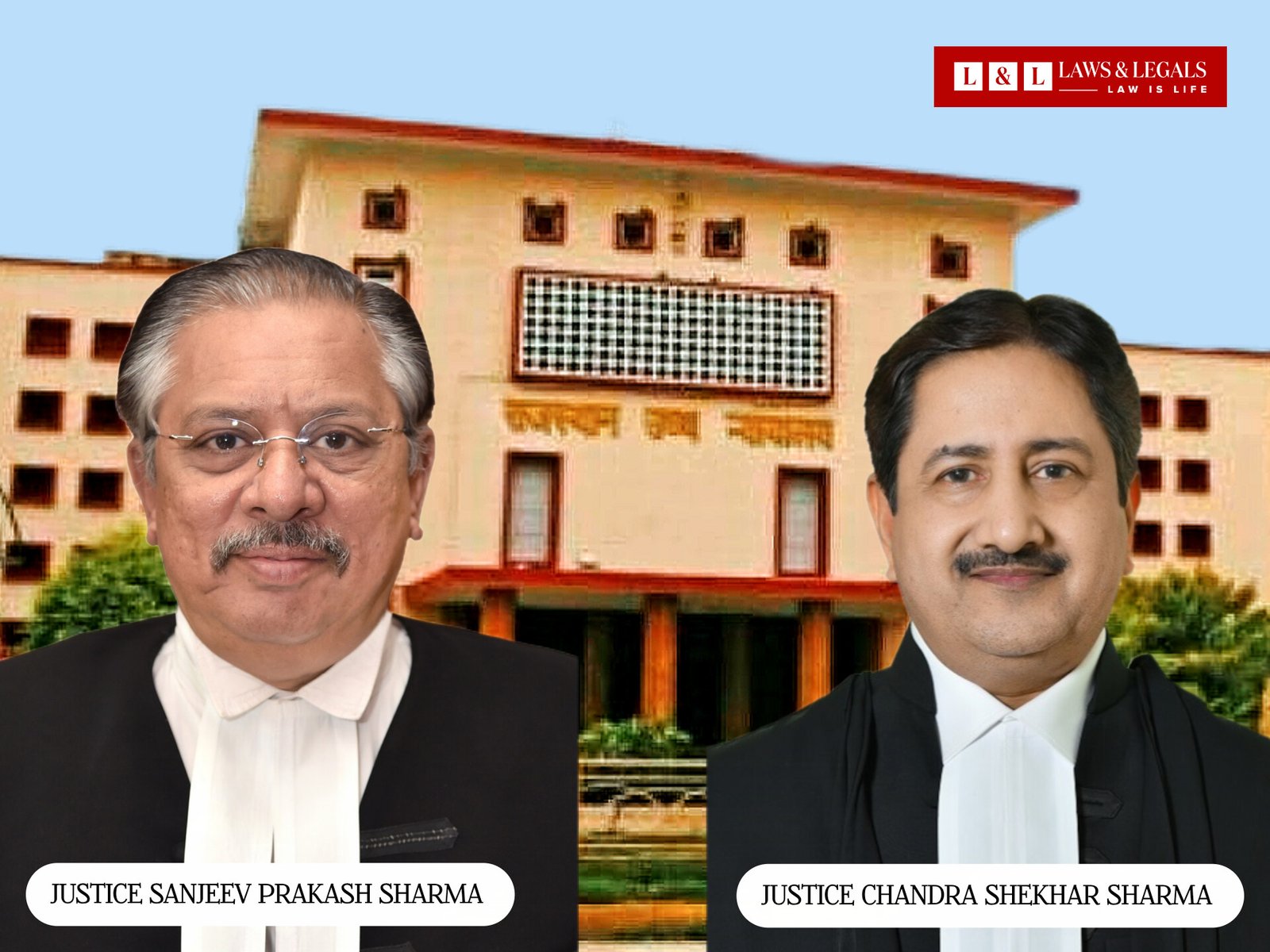
A Division Bench of Justice Sanjeev Prakash Sharma and Justice Chandra Shekhar Sharma allowed the appeal filed by Umesh Singh, set aside the Single Judge’s order rejecting his claim, and directed the respondent institution to consider his appointment on a suitable post forthwith.
Umesh Singh’s father, a technician with the respondent institution, died in harness on March 3, 2005, when Umesh was only about two-and-a-half years old. He attained majority on August 1, 2020 and applied for compassionate appointment shortly thereafter. His claim was rejected primarily on the ground that nearly 15 years had elapsed since his father’s death.
The Division Bench, however, held that mere passage of time cannot be treated as an automatic bar where the dependent could not have applied earlier because he was a minor.
The Court relied upon the applicable compassionate appointment scheme, which permits consideration of applications without prescribing an absolute time limit, subject to the availability of a vacancy and the merits of the case. It also referred to the Supreme Court ruling in Govinda Janardan Gaikwad v. State of Maharashtra, which recognised that the lapse of 15 years cannot defeat a claim where the dependent attained majority later and applied within a reasonable period.
The Bench further observed that the fact that a family had “managed somehow” for several years after the employee’s death does not, by itself, establish that the family had overcome its financial hardship.
The Court emphasised that such expressions must be understood in the context of the right to live with dignity under Article 21 of the Constitution.
Rejecting the objection that other eligible family members had not earlier sought appointment, the Bench held that hyper-technical considerations cannot be allowed to defeat the very object of compassionate appointment, particularly when the governing scheme does not mandate that the first eligible family member must necessarily apply.
The Court clarified that compassionate appointment can certainly be denied where there is unexplained or unjustifiable delay, or where the financial crisis faced by the family has ceased to exist. However, those circumstances were not established in the present case.
The High Court accordingly allowed the appeal, quashed the rejection.