






Jaipur: The Rajasthan High Court has held that the Income Tax Department cannot issue a reassessment notice under Section 148 of the Income Tax Act, 1961, for an assessment year after the Income Tax Settlement Commission has already passed a final order under Section 245D(4) for the same matter.
The Court clarified that once the Settlement Commission passes its final order, the department cannot reopen the same matter through the regular reassessment process. If the department seeks to take further action, it must follow the procedure prescribed under the law.
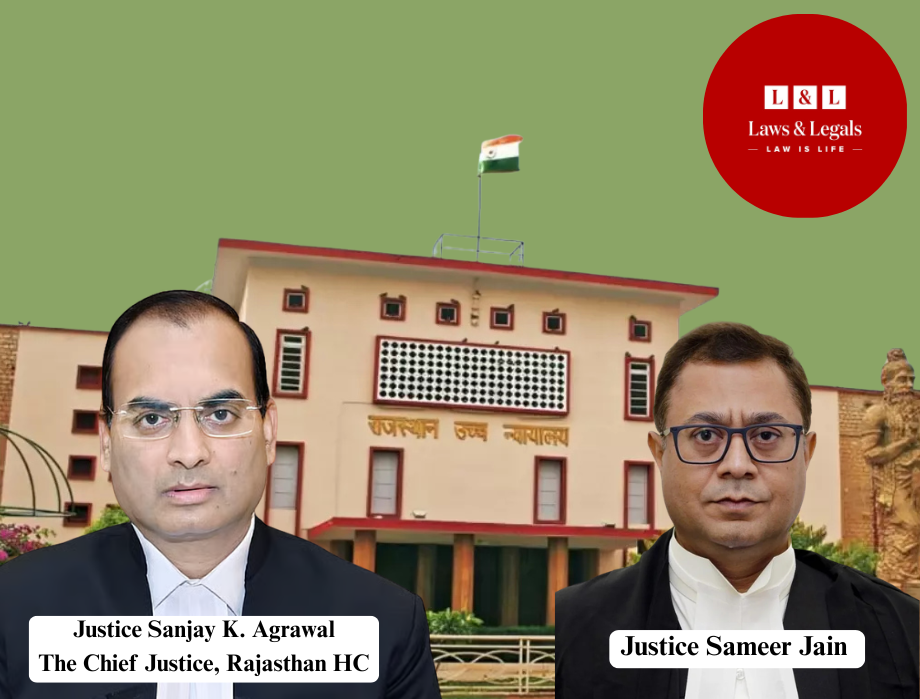
A division bench of Chief Justice Sanjay K. Agrawal and Justice Bipin Gupta passed the ruling while partly allowing two petitions filed by Abhay Kumar Godha and Sanjay Godha. The Court quashed the reassessment notices dated March 28, 2021, issued for Assessment Year 2014-15.
However, the bench allowed the Income Tax Department to take further action in accordance with Section 245D(6) of the Act.
Background of the Case
The petitioners had challenged reassessment notices issued by the Assistant Commissioner of Income Tax, Circle-1, Jaipur, under Section 148 of the Income Tax Act.
They pointed out that the Income Tax Settlement Commission had already passed its final order under Section 245D(4) on September 29, 2016, in relation to the same assessment year.
Despite this, the department issued fresh reassessment notices on March 28, 2021, for Assessment Year 2014-15. The petitioners approached the High Court seeking to quash the notices and all consequential proceedings.
Petitioners’ Arguments
Senior Advocate Siddharth Ranka, appearing for the petitioners, argued that the Settlement Commission had already settled the matter by passing its final order on September 29, 2016.
He submitted that after the Commission had passed its order under Section 245D(4), the Assessing Officer could not independently exercise the regular reassessment powers under Section 148 for the same assessment year.
The petitioners argued that the department could not reopen the matter through ordinary assessment or reassessment proceedings. If it had any ground to challenge the Settlement Commission’s order, it had to follow the procedure prescribed under the Act.
Reliance on Supreme Court’s Omaxe Limited Judgment
The petitioners relied on the Supreme Court’s judgment in Assistant Commissioner of Income Tax & Another v. M/s Omaxe Limited, pronounced on September 16, 2026.
Referring to paragraphs 23 to 28 of the judgment, they submitted that once the Settlement Commission passes a final order under Section 245D(4), the order attains finality. The Assessing Officer cannot thereafter independently exercise the regular reassessment powers under Section 148.
The Supreme Court had also clarified that where fraud or misrepresentation is alleged in the proceedings before the Settlement Commission, the department may take appropriate steps under Section 245D(6).
On this basis, the petitioners sought the cancellation of the reassessment notices.
Income Tax Department’s Stand
Advocate Siddharth Bapna, assisted by Advocates Tanushka Saxena, Jai Prakash Meena and Yashvi Khandelwal, appeared for the Income Tax Department.
The department did not dispute the legal principles laid down by the Supreme Court in the Omaxe Limited case. However, it submitted that the judgment also recognised the availability of a legal remedy for the department after the Settlement Commission had passed its order.
The department argued that it could take appropriate action under Section 245D(6) of the Act. It requested the High Court to preserve its right to initiate such proceedings if the reassessment notices were quashed.
High Court: Section 148 Notice Cannot Reopen a Matter Settled by the Commission
After hearing both sides, the division bench noted that there was no dispute that the Settlement Commission had passed an order under Section 245D(4) on September 29, 2016, for the relevant assessment year.
Despite the final order, the department had issued reassessment notices under Section 148 on March 28, 2021, for Assessment Year 2014-15.
Relying on the Supreme Court’s ruling in Omaxe Limited, the High Court held that the department could not issue a notice under Section 148 after the Settlement Commission had already passed its final settlement order for the same assessment year.
The bench observed that once the Settlement Commission’s order attains finality, the Assessing Officer cannot reopen the same matter through the regular reassessment process.
Department Can Proceed Under Section 245D(6)
The High Court also considered the department’s submission that the law provides a separate remedy under Section 245D(6).
The bench noted that, as clarified by the Supreme Court, the department may invoke this provision where fraud or misrepresentation is found in the proceedings before the Settlement Commission.
Under the prescribed legal procedure, the Settlement Commission’s order may be reconsidered and, in appropriate circumstances, declared invalid. The regular assessment proceedings may then be restored in accordance with the law.
The High Court clarified that the department must follow this statutory procedure. It cannot bypass the final order of the Settlement Commission merely by issuing a fresh reassessment notice under Section 148.
Reassessment Notices Quashed
Partly allowing the petitions, the division bench quashed the reassessment notices dated March 28, 2021, issued under Section 148 of the Income Tax Act for Assessment Year 2014-15.
At the same time, the Court granted liberty to the Income Tax Department to take further action under Section 245D(6), if permissible, in accordance with law.