



New Delhi: The Supreme Court has ruled that state governments can legally increase royalty and dead rent on mining leases even if the lease agreement does not specifically contain a clause allowing such revisions.
The Court held that a mining lease cannot prevent the government from exercising powers that have been granted to it under the law. It observed that the government’s authority to revise royalty and dead rent comes directly from mining legislation, not from the lease agreement.
Therefore, the absence of a specific provision in the lease deed does not stop the government from increasing these rates from time to time.
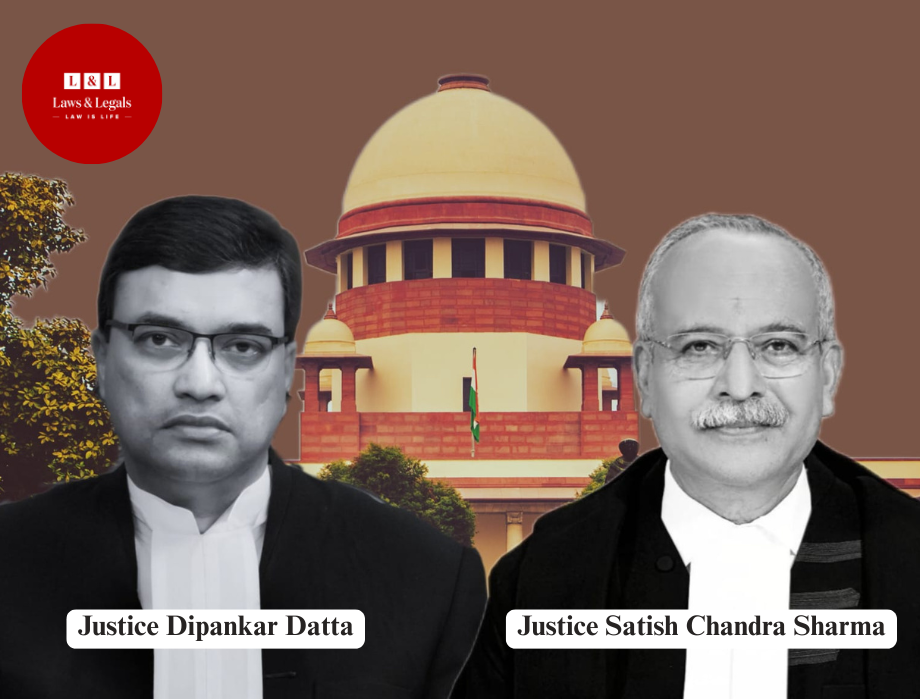
The judgment was delivered by a Bench of Justice Dipankar Datta and Justice Satish Chandra Sharma, which allowed an appeal filed by the Haryana Government and set aside a Punjab and Haryana High Court decision that had ruled in favour of a mining company.
The dispute arose after the Haryana Government granted a mining lease to Faridabad-Gurugram Minerals Pvt. Ltd. for extracting stone and other minerals.
Later, after the Central Government revised royalty rates, Haryana demanded payment of higher royalty and dead rent in accordance with the revised rates.
The company challenged the demand, arguing that its lease agreement did not contain any clause permitting the government to increase these charges after the lease had been granted. The Punjab and Haryana High Court accepted the company’s argument and ruled that the government could not recover the additional amount.
The Haryana Government appealed to the Supreme Court, contending that mining leases are granted under the Mines and Minerals (Development and Regulation) Act (MMDR Act) and the rules framed under it.
It argued that the law itself authorizes the government to revise royalty and dead rent, and this statutory power cannot be limited by the terms of a contract.
The Supreme Court agreed with the government’s arguments and explained that a mining lease is a statutory contract, not an ordinary private contract. This means that the lease is governed not only by the written agreement but also by the provisions of the mining laws.
If the law gives the government the power to revise royalty and dead rent, that power remains valid even if the lease agreement is silent on the issue.
The Court also emphasized that minerals are valuable public resources and that the government acts as a trustee of these resources on behalf of the public.
Because of this responsibility, the government must have the authority to revise royalty and dead rent to reflect changing economic conditions, ensure proper management of natural resources, and protect public revenue. Such revisions do not amount to a breach of contract or violate the law.
The Supreme Court observed that if governments were prevented from increasing royalty simply because a lease deed did not contain an express provision, it would defeat the purpose of the mining laws and adversely affect public revenue.
Accordingly, the Court set aside the Punjab and Haryana High Court’s judgment and held that the Haryana Government’s demand for revised royalty and dead rent was legally valid.
It clarified that statutory powers granted by law cannot be taken away or restricted by the terms of a contract, and mining companies cannot refuse to pay revised royalty merely because their lease agreements do not expressly provide for future increases.
The ruling is expected to have significant implications for mining leases across India, as it confirms that governments retain their statutory authority to revise royalty and dead rent in accordance with the law, regardless of the wording of individual lease agreements.