





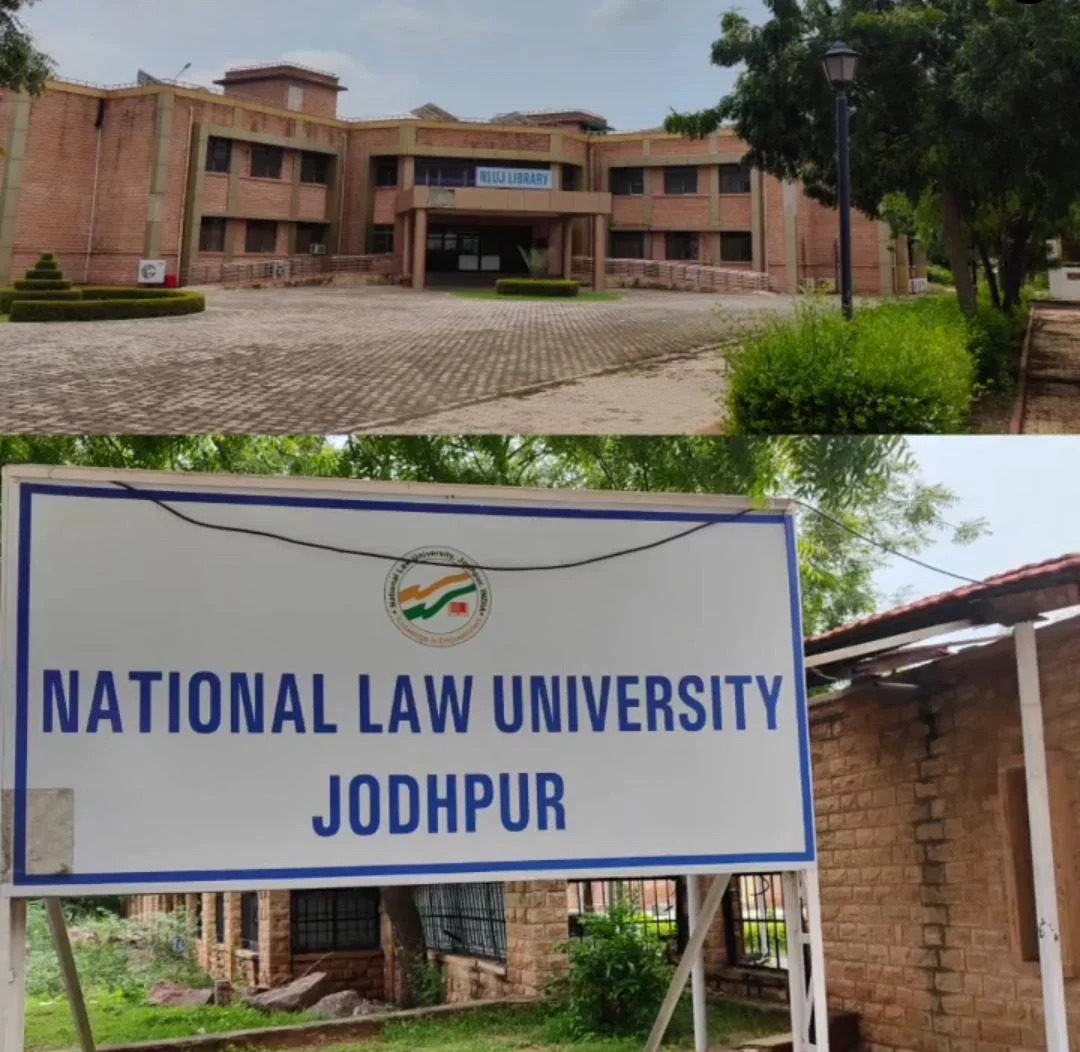
Jodhpur: A major controversy has erupted at National Law University Jodhpur, one of India’s leading law universities, after an LLM student accused the university of unfairly withdrawing two gold medals from him just minutes before the convocation ceremony.
The case has now reached the Rajasthan High Court, where student Anuj Shukla filed a petition alleging that the university not only stopped him from receiving the medals at the last moment, but later awarded the medals and certificates prepared in his name to another student.
The controversy has become especially significant because the university’s 17th Convocation Ceremony was attended by Bhajan Lal Sharma as the chief guest and Jogaram Patel as the special guest.
The High Court has now sought a response from the university and has also asked it to clarify the issue regarding the petitioner’s marksheet.
The dispute is no longer being seen as just a disagreement over academic awards. It has raised serious questions about the university’s transparency, examination system, re-evaluation process, and academic decision-making.
According to the petition, Anuj Shukla was a student of the LLM (IPR) batch of 2023–24. He claimed that the university’s Gold Medal Committee, in a meeting held on February 8, 2025, recommended him for two gold medals. This recommendation was later approved by the Academic Council on February 15, 2025.
The petition states that all preparations had been made to award him the medals during the 17th convocation ceremony held on February 23, 2025. His name was even printed in the official convocation brochure circulated among guests and dignitaries.
However, just five minutes before the ceremony began, a faculty member and the Controller of Examinations (COE) allegedly informed him that because he had applied for re-evaluation, he would not receive the gold medals.
Anuj Shukla argued that he only wanted fairness and transparency. He alleged that the university administration changed its decision arbitrarily at the last moment without giving him any proper opportunity to be heard.
The controversy mainly revolves around the re-evaluation of one subject, “Research Methodology,” from his first semester. According to the petition, he had originally scored 82 out of 100 in the paper. After re-evaluation, his marks were reduced to 65.
The student claimed that such a drastic reduction was shocking and unexpected. He said he emailed the examination controller requesting permission to inspect his answer sheet, but received no response.
Despite the reduction in marks, the petition says he performed exceptionally well in the second semester and still secured the highest overall marks in his batch across both LLM streams.
One of the most important claims made in the petition is that university officials had allegedly informed him earlier that revised marks would only apply if the change exceeded 10 percent; otherwise, the original marks would remain valid. According to the student, this practice had also been followed in cases involving other students.
Based on that understanding, the university initially treated his original marks as valid, declared him topper, selected him for gold medals, and prepared certificates in his name. But shortly before the convocation ceremony, the decision was suddenly reversed.
The petition further alleges that when he requested a fair hearing after being informed about the withdrawal of the medals, the Controller of Examinations refused to provide one. The student also claimed that university staff themselves appeared uncertain about the applicable rules.
Another serious allegation made in the petition is that the two gold medals and certificates prepared in his name were later awarded to another student during the ceremony. According to the student, the Vice Chancellor was occupied with the convocation proceedings while he was trying to raise his concerns, and eventually the decision was changed in favor of another student.
If proven true, this allegation could indicate not just administrative negligence but a serious failure in academic governance and procedural fairness.
The petition also accuses the university of issuing a new marksheet later with a backdated signature. The student alleged that on March 17, 2025, the examination department issued a fresh marksheet but marked it as verified and signed on February 23, 2025. He described this as an attempt to create documents later while showing an earlier date to justify the university’s decision.
After the incident, Anuj Shukla also filed an RTI application seeking details of the proceedings related to the February 23 meeting.
The petition argues that under Section 15(k) of the National Law University Act, 1999, only the Academic Council has the authority to approve gold medals. Therefore, changing the decision at the last moment may have violated university rules.
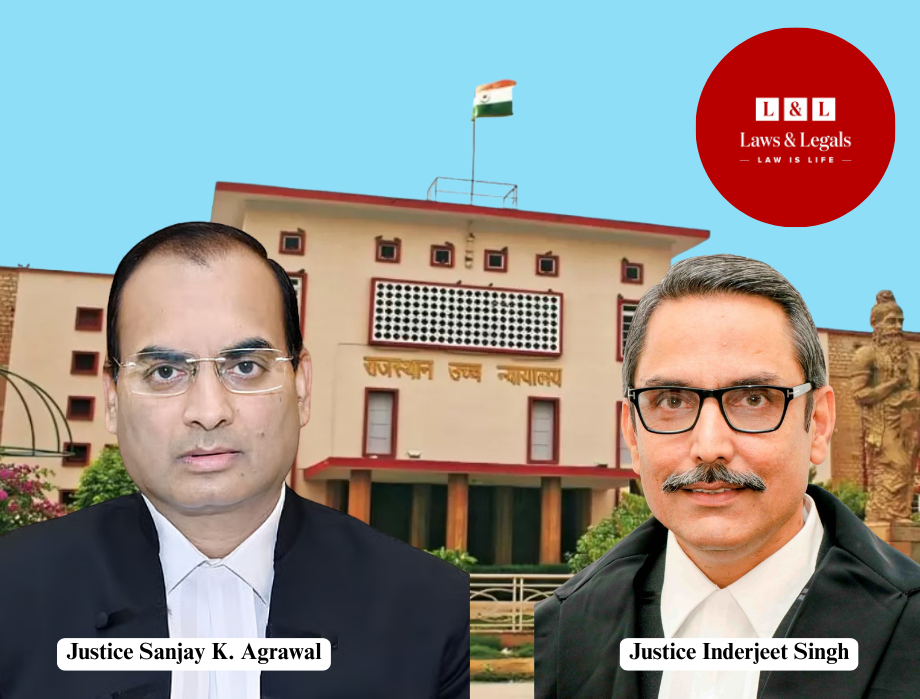
The matter came up for hearing before Justice Sanjeet Purohit on May 22. During the hearing, the university’s lawyer sought more time to file a detailed reply.
The High Court has now listed the matter for the second week of July 2026. The Court also issued interim directions asking the university to comply with necessary procedures regarding the petitioner’s marksheet.
The case has sparked widespread discussion in legal education circles across India. Experts believe that if a student is deprived of a major academic honour moments before a convocation ceremony, it becomes not only an administrative issue but also a matter affecting the student’s academic reputation and mental well-being.
The controversy has also raised broader questions:
Why was the student declared topper and selected for gold medals if his revised marks were already reduced?
Was there a lack of coordination between the examination branch and Academic Council?
Were rules changed at the last moment?
Can medals prepared in one student’s name legally be awarded to someone else?
Why was a later-issued marksheet allegedly given an earlier date?
Was the student denied a fair hearing before the decision was changed?
The answers to these questions are now expected to emerge through the university’s official response and the ongoing court proceedings.
As one of India’s premier law institutions, National Law University Jodhpur enjoys a strong reputation, with its graduates working in the judiciary, corporate sector, and international institutions. Because of that, the controversy over gold medals and examination procedures could also affect the institution’s credibility and public image.
All eyes are now on the next hearing in July 2026, where the Court may determine what exactly happened in the final moments before the convocation ceremony that allegedly cost a student two gold medals.