




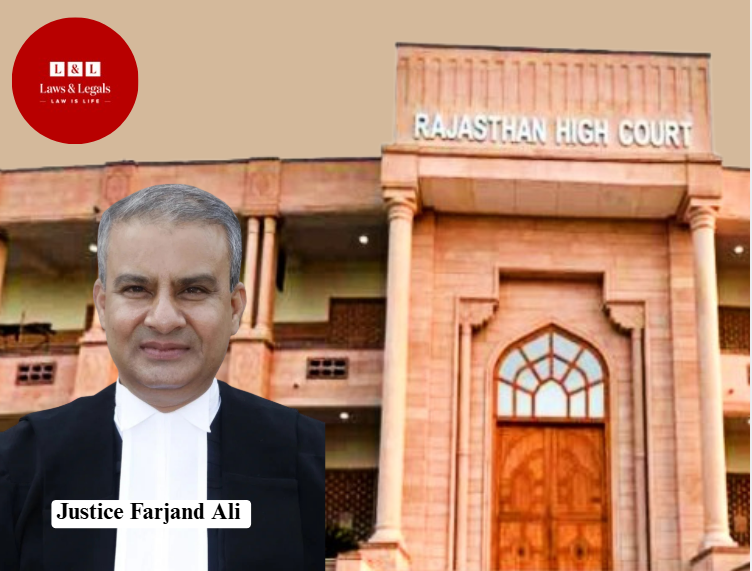
Jodhpur: The Rajasthan High Court has ruled on a dispute over the management and possession of Gurdwara Mehtabgarh Sahib in Goluwala, Hanumangarh.
Justice Farjand Ali, sitting as a single judge, made it clear that religious faith, long-term service or managing a religious place does not automatically give a person ownership or exclusive legal possession of the land.
The case was filed by Harmeet Kaur, also known as Bibi, who claimed that she had been serving as the main sevadari of the gurdwara since 2016. She said she had been managing its daily affairs and had been in possession of the premises for several years. She also claimed that her appointment was made by the Shiromani Gurdwara Parbandhak Committee (SGPC).
The dispute became serious on October 3, 2025, when, according to the police and the State government, around 50–60 people allegedly reached the gurdwara carrying weapons including sticks, swords, axes and spears. They allegedly tried to enter the gurdwara by crossing its boundary wall despite police attempts to stop them. Two FIRs were registered in connection with the incident.
Because of the continuing tension and the possibility of violence, the SDM, Pilibanga, on October 3, 2025, ordered the gurdwara premises to be attached and appointed the SHO as receiver.
Harmeet Kaur challenged this order, but the Additional Sessions Judge, Hanumangarh, upheld it on November 18, 2025. She then approached the Rajasthan High Court.
Harmeet Kaur argued that there was no uncertainty about who was in possession of the gurdwara. She said she had been managing the premises for years and that there was no emergency that justified attachment or appointment of a receiver. She also argued that the dispute was mainly about management and not ownership of the land.
The State government, however, argued that the situation had gone far beyond an ordinary management dispute. According to the State, tensions had continued for several months, police had repeatedly been deployed, and incidents were occurring regularly. The October 3 incident involving an allegedly armed group showed that there was a real possibility of violence and disturbance of public peace.
The Court’s key observation was: “Faith is sacred but Possession is a question of law.” It explained that a gurdwara is a religious and spiritual institution where activities such as prayers, kirtan, ardas, seva and langar take place.
However, a person’s long association with the gurdwara, religious devotion, service or management responsibilities do not automatically make that person the owner of the property.
The Court also said that management and ownership are two different things. Even if the SGPC had appointed Harmeet Kaur to manage the gurdwara, that appointment alone would not establish her ownership of the land or building.
The Court noted that no title document, government grant, transfer, inheritance or other legal basis had been presented to establish ownership of the disputed property.
The Court also clarified that there is no universal rule requiring every gurdwara in Rajasthan to be managed by an SGPC-controlled committee. Some gurdwaras may be managed locally by committees formed by devotees and members of the Sikh community.
The Court further explained that proceedings under Sections 164 and 165 of the BNSS are preventive in nature. Their purpose is not to finally decide who owns a property, but to prevent a property dispute from resulting in violence or a breach of peace.
The Court found that appointing a receiver was justified because the administration was trying to prevent further confrontation.
However, the Court did not decide who ultimately owns the gurdwara or the land. The parties remain free to approach the appropriate legal forum to establish their permanent ownership or management rights.
The High Court dismissed Harmeet Kaur’s petition and upheld both the October 3, 2025 SDM order and the November 18, 2025 Sessions Court order.