




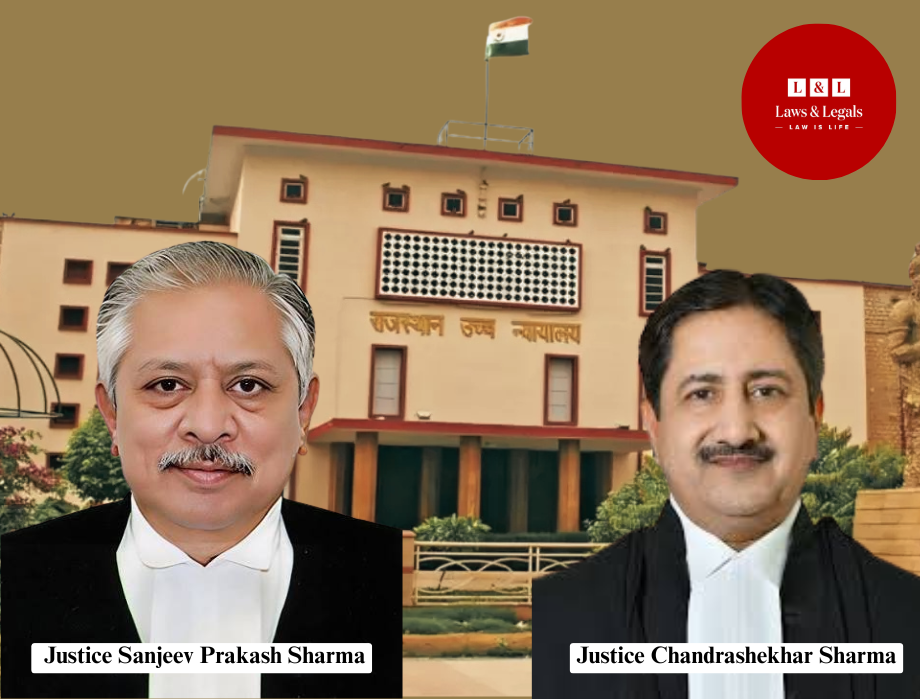
HC Orders Newspaper Publication of Encroachers’ List; Gives 15 Days to Remove Illegal Occupations
Jaipur: The Rajasthan High Court has taken a strict view of the increasing encroachments in the catchment area of Ramgarh Dam and has ordered that the list of identified encroachers be published in major newspapers.
The Court also said that media and journalists have an important role in protecting the catchment area and preventing fresh encroachments.
Media Called the “Eyes and Ears” of the Public
A Division Bench of Acting Chief Justice Justice Sanjeev Prakash Sharma and Justice Chandrashekhar Sharma said that the media and journalists are the “eyes and ears” of the public.
The Court said that if journalists come across any fresh encroachment in the catchment area, they can inform the Jaipur District Collector.
The administration will have to verify such information and, if the complaint is found to be correct, take immediate legal action.
The Court has therefore placed responsibility not only on the administration but also on local residents and the media to help keep the Ramgarh Dam catchment area free from encroachments.
Large-Scale Encroachments Found
The Court examined the affidavit and documents submitted by the District Collector in compliance with its earlier order dated July 30, 2026.
The documents contained a list of encroachments in the areas through which rivers, streams and other water channels flow towards Ramgarh Dam.
The Court noted that a large number of encroachments had been identified in Andhi, Jamwaramgarh, Amer, Shahpura and Viratnagar tehsils.
In several places, people had allegedly started cultivating government land and river-flow areas. In some locations, natural drainage channels had also been filled up, changing the course of water flow.
The Court considered the situation serious.
Encroachers Have No Legal Right to Remain
The High Court made it clear that people occupying land classified as non-mundum nala (drain), non-mundum hill, pasture land, river or similar land, if it falls within the direct catchment area or water-flow route towards Ramgarh Dam, have no legal right to continue their occupation.
Such occupants have been treated as encroachers on government land, and the identified encroachments must be removed.
Encroachers’ Names to Be Published in Newspapers
Since the number of encroachers is large, the Court noted that serving individual notices to every person could take considerable time.
Therefore, it ordered that the list attached to the District Collector’s affidavit be published in Rajasthan Patrika and Dainik Bhaskar for the concerned revenue villages and tehsils.
The purpose is to ensure that encroachers are informed about the proposed action and cannot later claim that they were unaware of the proceedings or were not given an opportunity to respond.
However, the Court clarified that encroachers must be given at least 15 days to remove the encroachment themselves, as required by law.
Government Can Remove Encroachments and Recover Costs
The Court warned that if encroachments are not removed even after public notice, the State authorities must proceed with their removal.
Any expenses incurred by the government or its officers in removing the encroachment can be recovered from the concerned encroacher.
If large-scale encroachment is found or people resist the removal process, the authorities can seek police assistance and initiate appropriate legal action, including criminal proceedings for encroachment on government property.
The Court stressed that the rule of law must prevail and all encroachments identified in the list must be removed.
Action Already Underway Against Previously Notified Encroachers
During the hearing, Advocate General Rajendra Prasad informed the Court that action was already being taken against encroachers who had previously been served notices.
Proceedings are being carried out under Section 91 of the Rajasthan Land Revenue Act, 1956 and Section 72 of the Jaipur Development Authority Act, 1982.
The Collector’s affidavit also contained reports of locations where tehsildars and revenue officials had already removed encroachments.
Citizens Can Also Report Encroachments
The Court also considered a suggestion by the amicus curiae that local residents should be allowed to report encroachments in their areas.
The Court said that whenever the District Collector receives information about a suspected encroachment, it must be verified. If the information is found to be correct, action can be initiated through the same legal process.
Next Hearing on September 15
The High Court has listed the matter for further hearing on September 15, 2026.
By then, the administration is expected to continue removing encroachments in accordance with the Court’s directions.