

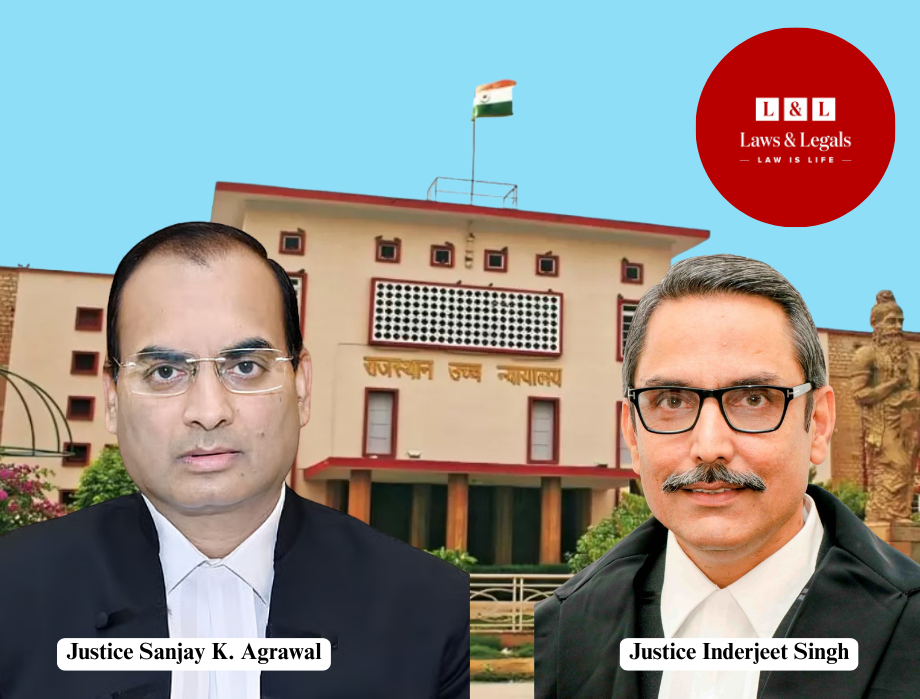




New Delhi: Chief Justice of India (CJI) Justice Surya Kant’s now-infamous “cockroach” remark has ceased to be merely a passing comment. It has become the focal point of one of the most significant public debates in recent memory one that cuts to the heart of the judiciary’s credibility, impartiality, and the trust ordinary citizens place in it.
Millions of reactions on social media, heated discussions within the legal fraternity, and widespread public anger have made one thing unmistakably clear: this controversy is not about a single word. It is the eruption of a deep, long-simmering discontent that has been building for years beneath the surface.
For arguably the first time in Indian history, a remark made by the occupant of the country’s highest judicial office has provoked such an open and widespread public response not merely criticism, but fundamental questions about how the judiciary functions, the fairness of its decisions, and whether it remains truly independent.
A Crisis That Did Not Happen Overnight
Legal experts are unanimous that this situation did not emerge in isolation. It is the product of a long chain of events and controversies spanning more than a decade.
The watershed moment came when four senior Supreme Court judges held an unprecedented press conference the first of its kind in Indian judicial history warning that democracy itself could be endangered if transparency within the judiciary was not maintained. That event planted a seed of public doubt that never fully went away.
Subsequently, the decision of then-Chief Justice Ranjan Gogoi to accept a Rajya Sabha nomination shortly after retirement drew sustained criticism. Observers and legal scholars questioned whether a former CJI’s direct transition into a politically-appointed legislative position compromised the perception of judicial independence a perception that is as vital to the rule of law as independence itself.
The tenure of Justice D.Y. Chandrachud also attracted mixed public responses. A significant section of the public formed the view that the Supreme Court had become noticeably less assertive in checking executive overreach compared to earlier eras, particularly in matters of constitutional significance.
Judicial Appointments Under the Scanner
A major undercurrent fueling the current controversy is the persistent criticism surrounding judicial appointments through the collegium system.
Allegations have repeatedly surfaced that children and relatives of influential sitting judges and prominent senior advocates receive preferential consideration for elevation to the bench. Instances of multiple members of the same family occupying judicial positions across generations have done particular damage to public confidence.
Critics argue that when the same surnames appear repeatedly in a system as sensitive and consequential as the judiciary, it sends a demoralizing message to thousands of young lawyers and law students who believe that talent, hard work, and merit should be the only criteria for advancement. This perception whether or not it reflects the full reality quietly erodes the foundational trust upon which the entire justice system rests.
The sense among young advocates and law graduates that opportunities within the legal system are not equally distributed has only strengthened over time, contributing to a broader feeling of institutional alienation.
The Perception of Proximity to Power
Another dimension that has fed public skepticism is the visible closeness between senior members of the judiciary and the political executive.
Photographs of senior judges at government-organized events, appearances alongside cabinet ministers and law officials on public platforms, and accounts of lavish official tours have circulated widely on social media and generated persistent debate about whether the judiciary is successfully maintaining the image of distance from political power an image that is indispensable to public confidence in any democratic system.
It is important to note that such appearances do not necessarily indicate any compromise of judicial independence. However, in a climate already marked by heightened scrutiny, even the optics of proximity can inflict reputational damage that takes years to repair.
Sensitive Verdicts That Deepened Public Frustration
Judicial decisions in cases involving crimes against women including POCSO offences, rape, and sexual assault have also been a significant source of public discontent in recent years.
In several high-profile cases, the granting of bail or relief to accused persons prompted sharp public reactions, with many questioning whether victims were receiving adequate justice. The sight of accused individuals being publicly celebrated after receiving judicial relief in such cases added fuel to an already burning fire.
It is against this backdrop that the CJI’s “cockroach” remark landed with such explosive force. It did not arrive in a vacuum. For a public already carrying years of accumulated frustration, it became a symbol a single word that crystallized everything they had felt but struggled to articulate.
The Challenges Ahead for the Judiciary
Legal analysts warn that the road ahead for India’s judiciary will be considerably more demanding than it has been in recent decades.
Every significant judgment, every judicial appointment, and every high-profile case will now face a level of public scrutiny far more intense than before. Court decisions will be examined not only through a legal lens but through social and political ones as well — a development that places the judiciary under pressure it is institutionally unaccustomed to managing.
Many senior advocates and retired judges continue to insist that the judiciary remains the last line of democratic defense, and that a culture of public distrust toward it poses a serious risk to the constitutional order. They acknowledge the need for reform, but caution that undermining the dignity of institutions can cause harm that outlasts any single controversy.
Is This the Beginning of a Larger Movement?
On social media, many are already calling this the beginning of a “Cockroach Movement” — a phrase that, whatever its origins, captures a genuine public demand for accountability, transparency, and reform within the judicial system.
Political analysts suggest this is not a momentary controversy that will fade with the next news cycle. Rather, it could serve as the catalyst for a sustained national conversation about judicial accountability one that political leaders, civil society, and the legal profession will find increasingly difficult to sidestep.
If the legitimate concerns being raised by the public are not addressed with seriousness and sincerity, legal observers warn that the erosion of trust will deepen and the consequences for India’s democratic fabric could be severe.
The Fundamental Challenge
The most urgent challenge before India’s judiciary today is to rebuild public trust — not through statements or speeches, but through demonstrably fair decisions, transparent appointments, and a visible commitment to impartiality.
In a democracy, Parliament may enact laws and the executive may implement them, but the final refuge of the citizen — their last resort when all else fails — is the court of law. When that refuge itself comes under question, the warning siren is sounding not just for the judiciary but for Indian democracy as a whole.
The “cockroach” controversy, whatever its ultimate resolution, has forced a reckoning that the Indian legal establishment can no longer afford to ignore.