





Jodhpur: In a significant ruling on the legal consequences of abatement under the Code of Civil Procedure (CPC), the Rajasthan High Court has held that a judgment and decree passed after the death of the sole plaintiff, without bringing the legal representatives on record and without setting aside the statutory abatement, is a nullity in the eyes of law and incapable of execution.
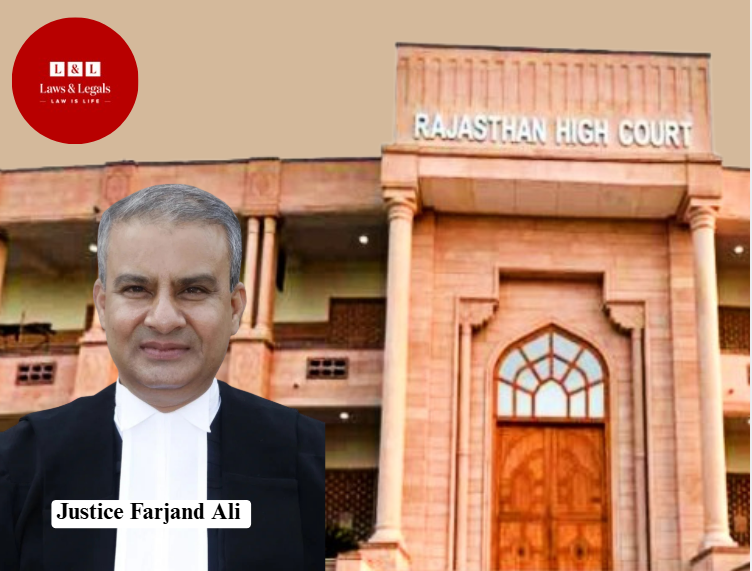
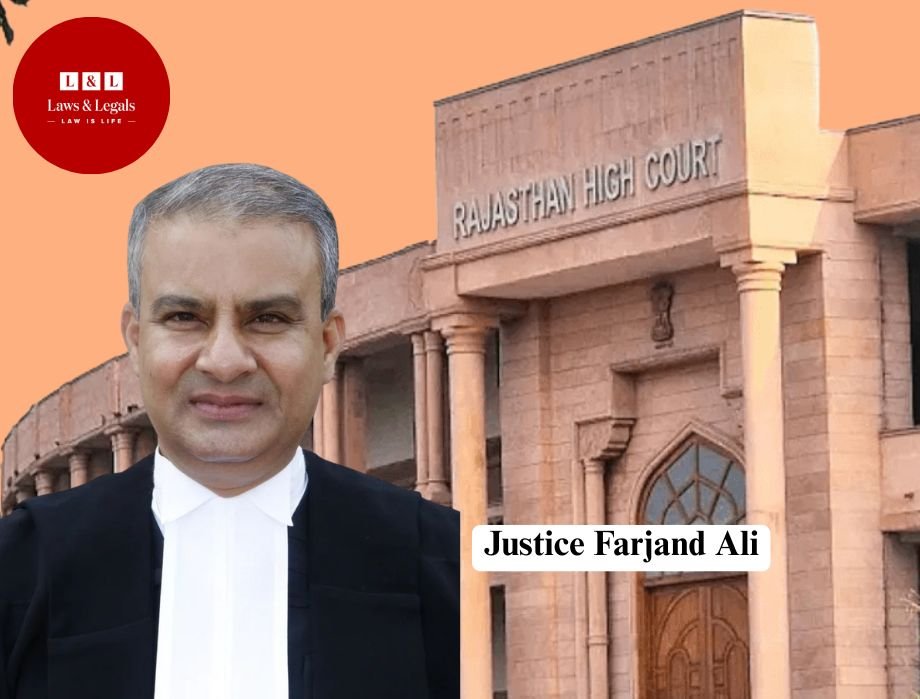
Justice Farjand Ali, allowing a first appeal, set aside an ex parte decree passed by the Additional District Judge, Pali, observing that once a suit abates by operation of law, the trial court loses jurisdiction to proceed unless the abatement is first set aside in accordance with Order XXII CPC.
The appeal arose from an ex parte judgment and decree dated 30 April 2025 passed in a civil suit instituted by the original plaintiff, Lala Ram.
The appellant challenged the decree after learning of it during execution proceedings, explaining that he had no prior knowledge of the judgment. The High Court condoned the delay of 345 days in filing the appeal, finding sufficient cause to entertain the matter in the interest of justice.
Before the High Court, the appellant pointed out that Lala Ram had died on 26 May 2023, nearly two years before the impugned judgment was delivered. Despite his death, no application was filed to substitute his legal representatives within the prescribed limitation period, nor was any application moved for condonation of delay or for setting aside the statutory abatement under Order XXII Rule 9 CPC.
The respondents, who claimed to be the legal heirs of the deceased plaintiff, admitted before the High Court that no application had been filed to bring them on record after his death, and no court order had been passed recognising them as parties before the decree was delivered.
The Court examined the statutory framework under Order XXII CPC, observing that where the sole plaintiff dies and the right to sue survives, the legal representatives must be brought on record within the prescribed period. Failing such substitution, the suit automatically abates by operation of law, and such abatement does not depend upon any formal order of the court. The only manner in which the proceedings can be revived is by seeking condonation of delay, setting aside the abatement, and obtaining an order substituting the legal representatives.
The court held that in the present case none of these mandatory statutory steps had been taken. Consequently, the trial court had no jurisdiction to continue with the proceedings or pronounce a judgment after the suit had already abated.
The Court further held that the legal representatives could not automatically assume the status of plaintiffs merely because the original plaintiff had died. Unless they were lawfully substituted through an order of the court, no decree could validly be passed in their favour.
Accordingly, the decree passed after the death of the sole plaintiff was declared a nullity and non est in the eyes of law.
No Valid Decree, No Execution
The High Court also declared the execution proceedings to be legally unsustainable. It observed that only a lawful “decree-holder” is entitled to initiate execution proceedings. Since the legal representatives had never been substituted in the suit, they never acquired the status of decree-holders and therefore lacked the legal authority to execute the decree.
The Bench held that a decree which is itself a nullity cannot be executed, and therefore the execution proceedings founded exclusively upon such a decree were equally liable to be set aside.
Allowing the appeal, the Rajasthan High Court set aside the judgment and decree dated 30 April 2025 as well as the consequential execution proceedings. However, the Court clarified that it had not examined the merits of the original dispute and granted liberty to the legal representatives of the deceased plaintiff to pursue any remedy available to them under law, including filing appropriate applications under Order XXII CPC for revival of the proceedings.