





Jodhpur: The Rajasthan High Court has quashed a rape case and all connected criminal proceedings against a man after finding that the FIR had been lodged under family pressure, while the relationship between the parties was consensual and the couple are now living together happily as husband and wife.
The Court held that although offences such as rape are serious in nature and ordinarily should not be quashed on the basis of a compromise, the High Court can exercise its inherent powers in exceptional cases where continuing the prosecution would serve no meaningful purpose and would instead amount to an abuse of the process of law.
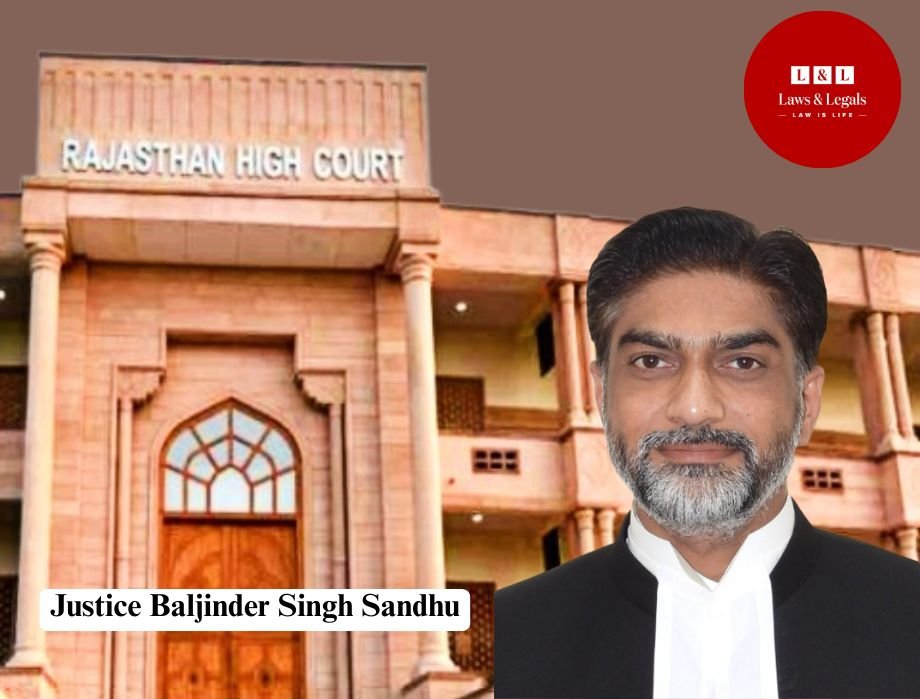
The judgment was delivered by Justice Baljinder Singh Sandhu while allowing a petition under Section 528 of the Bharatiya Nagarik Suraksha Sanhita (BNSS).
The case arose from an FIR registered in 2020 at Soorsagar Police Station, Jodhpur, under Sections 376, 376(2)(n), 377, 384, 506 and 450 of the Indian Penal Code. The petitioner sought quashing of the criminal proceedings on the ground that he and the prosecutrix had amicably resolved their dispute and were now living together as husband and wife.
During the hearing, the prosecutrix personally appeared before the High Court and stated that she had voluntarily married the petitioner before the FIR was registered. She told the Court that after the marriage both had returned to their respective homes, but when her parents came to know about the marriage, the FIR was lodged under pressure.
She further stated that she again left with the petitioner in December 2025, after which both families accepted their relationship, and since 25 December 2025 they have been living together peacefully as husband and wife.
The Public Prosecutor informed the Court that the trial had reached an advanced stage and most prosecution witnesses, including the prosecutrix’s parents, had already been examined.
However, it was not disputed that the parties were presently residing together as husband and wife. Counsel for the prosecutrix also supported the petition and confirmed that the dispute had been settled.
The High Court observed that both parties were majors when they married in 2020 and that their relationship had remained consensual throughout. It noted that despite nearly six years of litigation, the parties had reunited and consciously chosen to continue their matrimonial life.
The Court found that the criminal proceedings appeared to have been initiated because of family pressure rather than the absence of consent.
The Court relied on recent Supreme Court decisions, including Prashant Bhartiya v. State of Delhi, Madhukar v. State of Maharashtra (2025), and Mahesh Mukund Patel v. State of Uttar Pradesh (2025), which recognise that while rape cases should ordinarily not be quashed on the basis of settlement, the High Court may do so in rare and exceptional circumstances where continuation of the proceedings would not serve the ends of justice.
The High Court held that in the present case, the prosecutrix had unequivocally stated that she wished to continue her married life with the petitioner and had no grievance against him. In these peculiar facts, allowing the criminal trial to continue merely because it had reached an advanced stage would neither advance the cause of justice nor achieve the object of criminal law.
Instead, it would unnecessarily harass both parties and jeopardise the settled matrimonial life they had consciously chosen to lead.
Accordingly, the Rajasthan High Court quashed the FIR, the pending Sessions Case, and all consequential criminal proceedings against the petitioner.The ruling reiterates that although rape cases are ordinarily not liable to be quashed on the basis of compromise, the High Court may exercise its inherent jurisdiction in exceptional cases where the relationship was consensual, the complainant herself seeks an end to the prosecution, and continuation of the proceedings would amount to an abuse of the process of law.