






New Delhi: The Supreme court, in a recent judgement, has ruled that a married daughter cannot be denied benefits under government welfare schemes or compassionate appointment policies solely because she is married
The case was related to a woman resident of Uttar Pradesh. Her mother owned a fair-price ration shop. After her mother’s death, the daughter applied to have the shop licence transferred to her on compassionate grounds.
Authorities, however, rejected her application because she was married. A 2019 government order defined “family” in a way that included only unmarried daughters.
The woman challenged this decision, arguing that she continued living with her family and supported her mother in running the shop even after marriage. She also cared for her disabled sister.
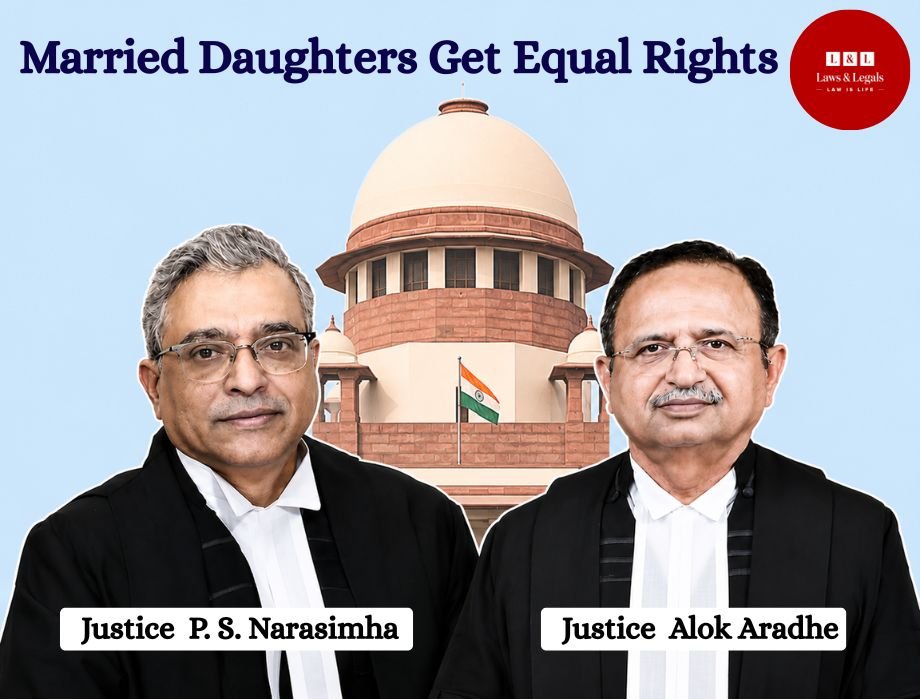
A bench of Justice P. S. Narasimha and Justice Alok Aradhe set aside the order of the Allahabad High Court that had denied benefits to married daughters.
The Supreme court said that this decision was discriminatory because no similar restrictions apply to married sons. If a married son can be treated as a member of the family, a married daughter cannot be excluded simply because of her marital status.
The court agreed with earlier rulings of the Bombay High Court and Karnataka High Court, which had said that marriage does not extinguish a women’s rights or her relationship with her parents’ family
The Court emphasized several key principles:
Marriage does not end a woman’s family responsibilities.
A daughter may continue to care for and support her parents after marriage.
Government welfare schemes cannot exclude women solely because they are married.
Treating married daughters differently from married sons amounts to gender discrimination.
The Court found that Kulsum was actively supporting her mother in running the ration shop and continued to support her family after her mother’s death. Therefore, rejecting her application solely because she was married was unconstitutional.
Because of this , the Supreme Court cancelled the orders rejecting her application and directed the authorities to issue her the fair-price shop licence within four weeks.
The significance of this judgment goes beyond ration shop licences or compassionate appointments. The ruling reinforces the principle that a woman’s legal identity and family ties do not end after marriage. It could influence future cases involving compassionate appointments, family pensions, government benefits, inheritance, and other welfare schemes where married daughters have traditionally faced exclusion.
In addition, the Supreme Court has clarified that government policies must be interpreted in line with constitutional equality, and marital status alone cannot be used to deny women rights or benefits.