




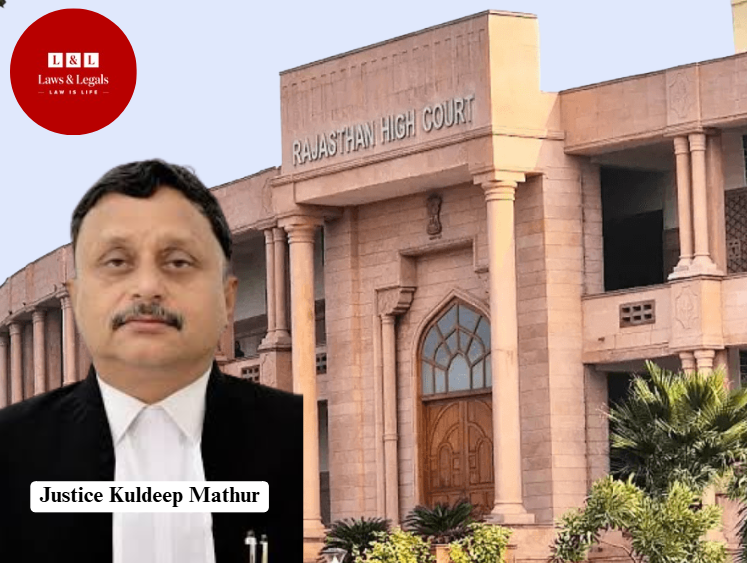
Jodhpur: Rajasthan HC Refuses to Release SUV Used to Transport 26.9 Kg Poppy Husk, Says Accused-Owner Has No Automatic Right to Interim Custody.
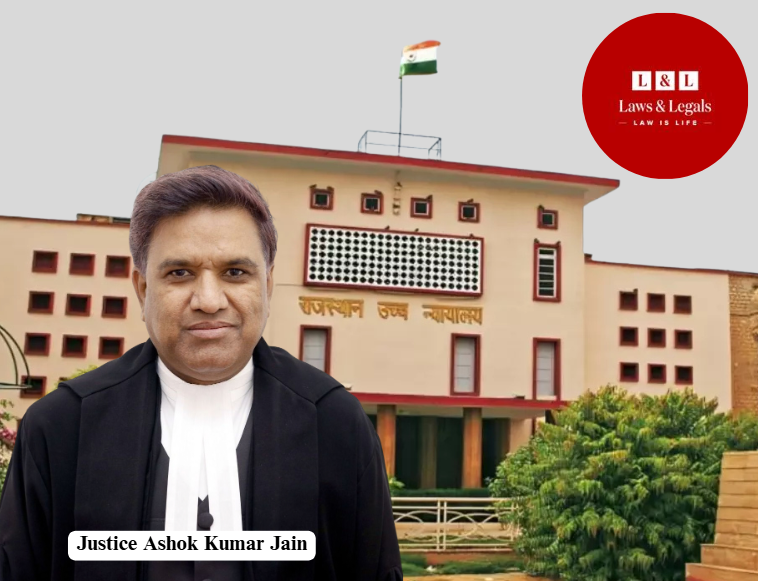
Justice Kuldeep Mathur dismissed a revision petition filed by Jasakaran Singh alias Jassi, upholding the trial court’s refusal to grant interim custody of the SUV seized in an NDPS case, holding that an accused who is also the registered owner of the vehicle cannot claim interim custody as a matter of right merely because the vehicle may deteriorate while lying in police custody.
The case arose from a 20 November 2025 naka checking in Sri Ganganagar, during which police allegedly recovered 26.9 kg of poppy husk hidden inside the bonnet compartment of the petitioner’s Mahindra Thar. Jasakaran Singh, who was driving the vehicle and is its registered owner, was arrested and the SUV was seized
Before the High Court, the petitioner contended that the SUV was a valuable asset and would suffer depreciation if left parked at the police station. Relying on the Supreme Court’s judgment in Sunderbhai Ambalal Desai and a recent Rajasthan High Court order, he contended that seized vehicles should ordinarily be released during the pendency of criminal proceedings.
The State opposed the plea, submitting that the petitioner himself was the owner as well as the driver of the vehicle allegedly used for transporting narcotic contraband. It argued that the issue was governed by the Supreme Court’s later decision in Bishwajit Dey, which lays down stricter principles for the interim release of vehicles seized in NDPS offences.
Examining the law, the High Court observed that while the NDPS Act provides for confiscation of vehicles, their interim release is governed by Section 497 of the BNSS. It said courts have the discretion to release a seized vehicle, but the decision must depend on the facts of each case and the interests of justice.
The Court further clarified that the Supreme Court’s ruling in Sunderbhai Ambalal Desai does not require every seized vehicle to be released. Instead, in NDPS cases, the principles laid down in Bishwajit Dey apply, under which an owner who is himself accused of transporting contraband cannot claim interim custody as a matter of right.
Applying these principles, Justice Mathur held that mere ownership of the vehicle or the possibility of depreciation cannot justify its release while the criminal case is pending. The Court also refused to follow an earlier coordinate Bench decision relied upon by the petitioner, observing that it had not considered the binding Supreme Court precedents governing the issue.
Finding no illegality in the trial court’s order, the High Court dismissed the revision petition, holding that the apprehension that the vehicle could again be used for transporting narcotic substances was a valid ground to deny its interim release.